

Over-tourism at Niagara Falls has reached a tipping point. In peak summer months, more than 30,000 visitors per day converge on the Canadian side, creating bottlenecks at attractions, straining local infrastructure, and diluting the authentic experience travelers seek. Yet a growing segment of tour operators is responding with a different model: Sustainable Small-Group Toronto–Niagara Tours: How to Support Local Businesses and Avoid the Crowds are reshaping how visitors experience the region in 2026, prioritizing intimate group sizes, early departures, and community-based stops that channel tourism dollars directly into local economies.
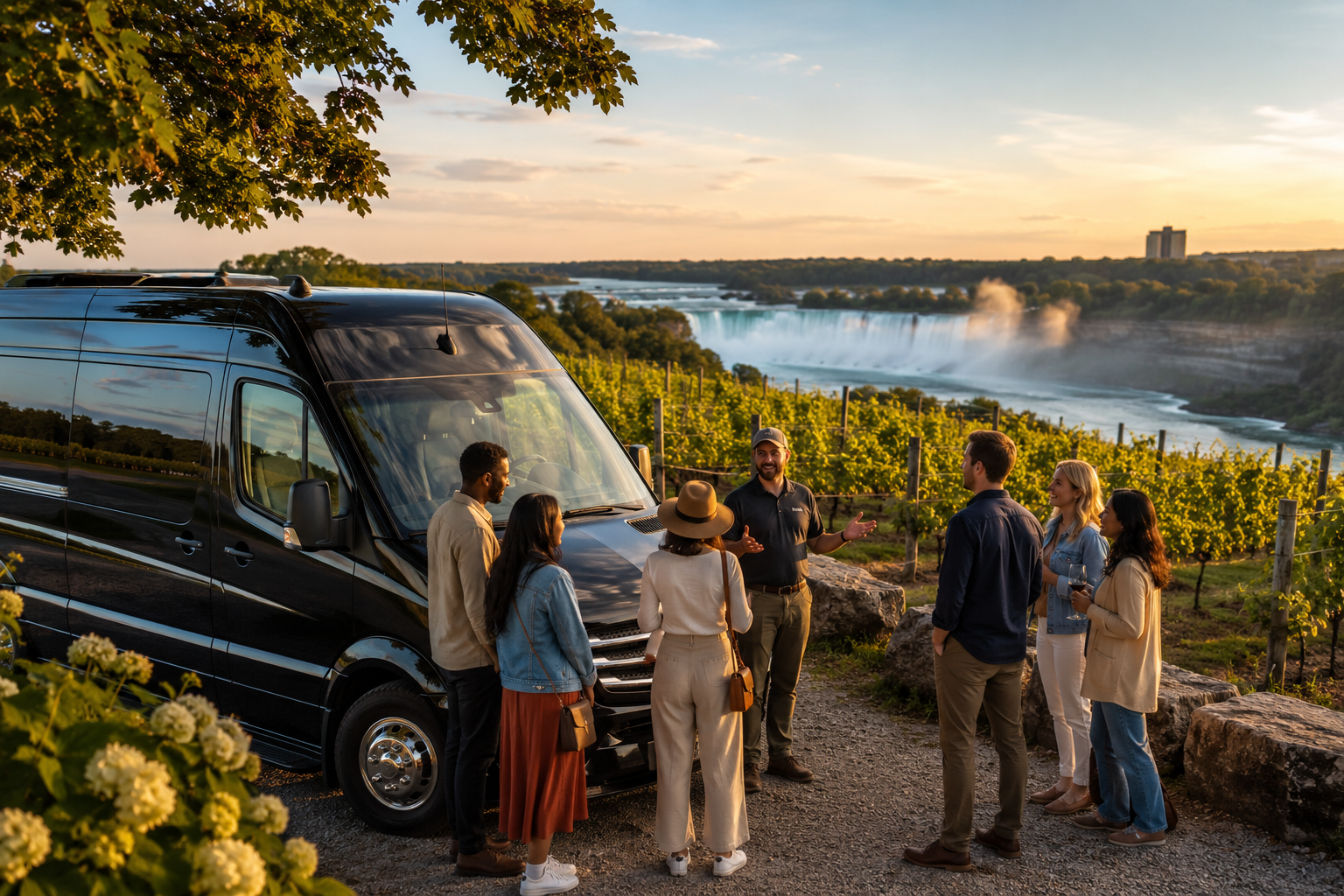
These tours typically cap groups at twelve passengers or fewer, use smaller vehicles, and design itineraries around timing and regional diversity rather than simply shuttling crowds between the same three photo stops[1]. The result is a travel experience that reduces congestion, supports independent businesses, and delivers the personalized attention that mass-market bus tours cannot match.
Key Takeaways
- Small-group tours cap capacity at 12 passengers or fewer, reducing crowding and environmental impact compared to 40-seat coaches.
- Early morning departures (8:00–8:45 AM) help groups reach Niagara attractions before peak-day visitor surges.
- Itineraries that include local wineries, farm markets, and independent restaurants directly support the regional economy.
- Pricing for sustainable small-group day tours ranges from CA$149 to CA$199 per adult, with discounts for seniors and children.
- Choosing guided tours from Toronto with transparent sustainability practices helps travelers align their spending with responsible tourism values.
Why Small-Group Tours Are the Sustainable Choice for Toronto–Niagara Travel
The Environmental and Social Case for Smaller Groups
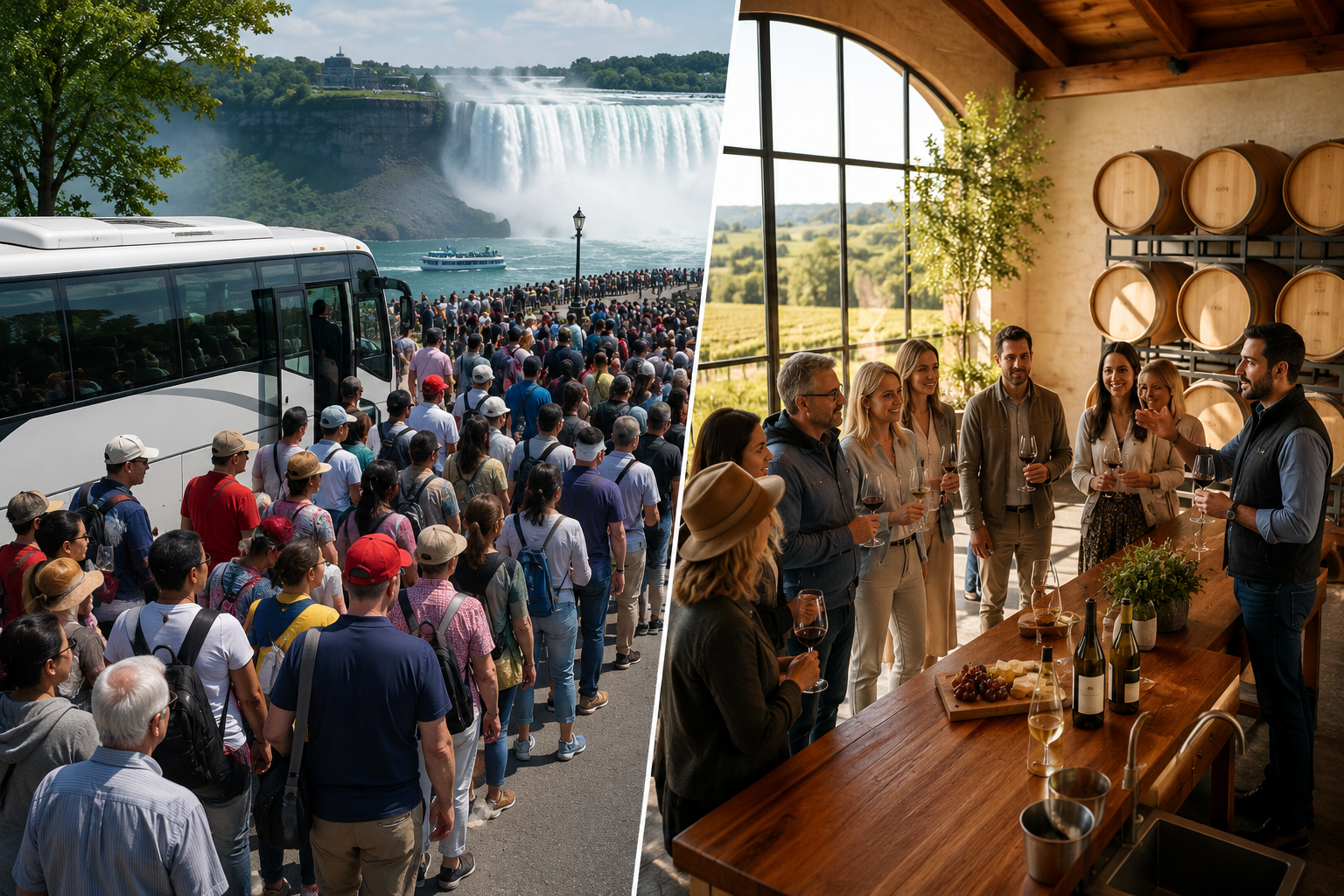
Large tour buses carrying 40 or more passengers may seem efficient on paper, but they contribute to localized congestion, require oversized parking infrastructure, and funnel visitors into the same narrow time windows at major attractions. Sustainable Small-Group Toronto–Niagara Tours: How to Support Local Businesses and Avoid the Crowds address these issues by design.
A tour capped at twelve passengers uses a smaller vehicle—often a luxury van or minibus—that consumes less fuel per trip and occupies less space at crowded sites[1]. More importantly, these tours can access secondary routes, smaller parking areas, and off-peak time slots that large coaches cannot, distributing visitor pressure across the region rather than concentrating it at a handful of iconic viewpoints.
From a social perspective, smaller groups foster genuine interaction between travelers and local guides, who can share nuanced stories about the region’s history, ecology, and community challenges. This depth of engagement is nearly impossible when a guide is managing 50 people through a scripted itinerary.
How Group Size Affects Your Experience and the Destination
When you join a Niagara Falls private tour vs. group tour, the difference in group size directly shapes your day. A twelve-person tour allows for:
- Flexible timing: Guides can adjust the schedule based on real-time crowd conditions, weather, or group interests.
- Better access: Smaller groups can visit boutique wineries, family-run restaurants, and artisan shops that cannot accommodate large buses.
- Reduced wait times: At major attractions like the boat cruise, smaller groups often move through queues faster and can coordinate entry during quieter windows.
- Authentic local interaction: Travelers have time to ask questions, explore independently, and connect with business owners rather than being herded through a transactional experience.
One current Toronto–Niagara tour explicitly markets a “max of 12 per group” as a core feature, signaling that operators recognize capacity limits as both a sustainability tool and a quality differentiator[1].
How to Identify and Book Sustainable Small-Group Toronto–Niagara Tours
Key Features to Look for in a Responsible Tour Operator
Not all “small-group” tours are created equal. To ensure your booking supports Sustainable Small-Group Toronto–Niagara Tours: How to Support Local Businesses and Avoid the Crowds, evaluate operators on these criteria:
| Feature | What to Look For | Why It Matters |
|---|---|---|
| Group Size Cap | Maximum 12-15 passengers | Reduces crowding, enables personalized service |
| Early Departure Times | Pickup between 8:00–8:45 AM | Avoids peak-day congestion at attractions |
| Local Stops | Wineries, farm markets, independent restaurants | Channels spending to regional businesses |
| Vehicle Type | Luxury van or small coach | Lower emissions, better maneuverability |
| Guide Expertise | Local knowledge, not scripted commentary | Authentic storytelling, flexible itinerary |
| Transparent Pricing | Clear breakdown of inclusions | No hidden fees, fair compensation for guides |
When comparing Niagara Falls tour vs self-drive from Toronto, remember that a well-designed small-group tour eliminates the stress of navigation and parking while delivering curated access to experiences you might miss on your own.
Pricing and What’s Included in 2026
Current small-group day tours from Toronto to Niagara Falls range from CA$149 to CA$199 per adult, with discounts for seniors (CA$139) and children (CA$99)[2][3]. These prices typically include:
- Round-trip transportation from downtown Toronto or Mississauga
- Admission to major attractions (boat cruise, Journey Behind the Falls, or observation tower)
- Guided commentary and regional stops
- Flexible itinerary with time for independent exploration
Some operators advertise promotional pricing—one tour lists a regular adult rate of CA$249 with a 40% discount bringing it to CA$149[3]. Always verify what’s included before booking, as some tours bundle all attraction fees while others charge separately.
For travelers seeking a longer experience, multi-day small-group itineraries that combine Toronto, Niagara, Ottawa, Montreal, and Quebec are available, with one 2026 listing priced at US$1,279.25 per person for five days[4]. These extended tours offer deeper regional immersion but require a larger time and budget commitment.
Supporting Local Businesses Through Your Tour Choice
How Itinerary Design Channels Tourism Dollars to the Community
The most direct way to support local businesses is through itinerary design. Sustainable small-group tours intentionally include stops at:
- Family-owned wineries: Niagara-on-the-Lake is home to dozens of boutique wineries that rely on direct visitor sales. A tour that allocates time for tastings and purchases helps these businesses thrive.
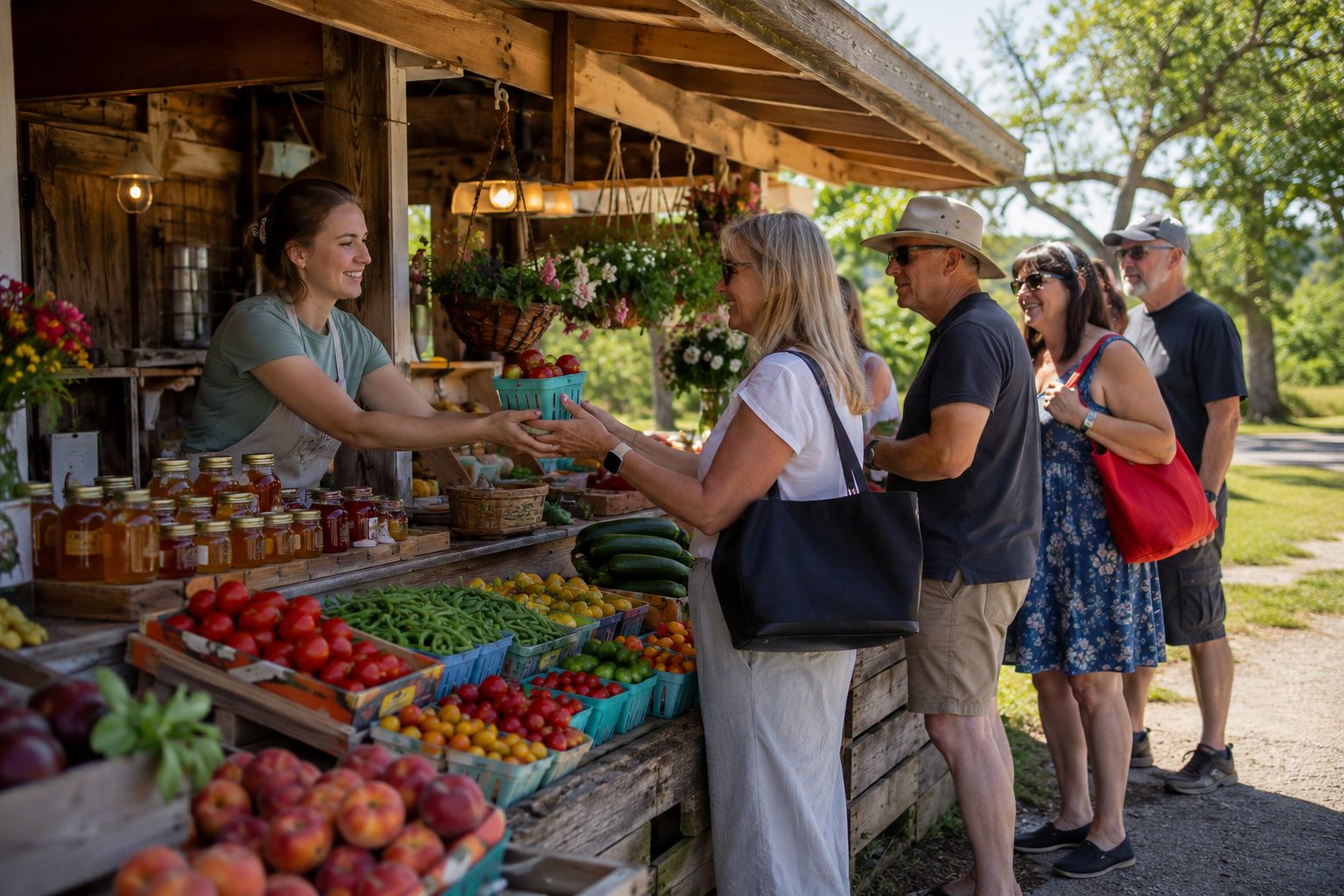
- Farm markets and artisan producers: Stops at local markets, honey producers, and craft shops keep tourism revenue within the community rather than flowing to multinational chains.
- Independent restaurants: Lunch or snack breaks at locally owned cafes and bistros provide income to small business owners and showcase regional cuisine.
One of the clearest ways to evaluate a tour’s local impact is to ask: Where does the itinerary take us, and who benefits from our spending? Tours that rush from Toronto to the falls and back, with only chain-restaurant stops, offer minimal community benefit. Tours that build in regional exploration create economic multipliers that strengthen the destination[1][3].
Questions to Ask Before Booking
To ensure your tour aligns with responsible tourism values, ask operators:
- What is your maximum group size? (Look for 12 or fewer.)
- What time do we depart Toronto? (Early departures reduce crowding.)
- Which local businesses are included in the itinerary? (Specific names indicate genuine partnerships.)
- How do you compensate guides? (Fair wages support quality service and local employment.)
- Do you have a sustainability policy? (Even informal practices matter—ask about waste reduction, fuel efficiency, or community partnerships.)
If an operator cannot answer these questions clearly, consider it a red flag. Transparent communication is a hallmark of responsible tourism.
Avoiding the Crowds: Timing, Logistics, and Insider Strategies
Why Early Departures Make All the Difference
One of the most effective crowd-avoidance strategies is early departure timing. Tours that pick up passengers in Toronto and Mississauga between 8:00 and 8:45 AM typically reach Niagara Falls by mid-morning, ahead of the peak-day surge that begins around 11:00 AM[1].
This timing advantage means:
- Shorter lines at the boat cruise and other attractions
- Better photo opportunities without crowds in the frame
- More relaxed exploration of viewpoints and trails
- Easier parking and site access for the tour vehicle
For travelers comparing 5 reasons to book a guided tour to Niagara Falls, the ability to bypass parking hassles and arrive during quieter windows is a major benefit.
Seasonal Considerations and Off-Peak Travel
While summer remains the busiest season, shoulder months (April–May and September–October) offer excellent conditions for sustainable travel:
- Fewer visitors at major attractions
- Lower accommodation and tour prices
- Comfortable weather for outdoor exploration
- Fall foliage or spring blooms add visual interest
Winter tours are also available, though some attractions operate on reduced schedules. For details, see our guide to Niagara Falls winter tours.
Combining Crowd Avoidance with Local Exploration
The best Sustainable Small-Group Toronto–Niagara Tours: How to Support Local Businesses and Avoid the Crowds balance iconic must-see sites with lesser-known regional gems. A well-designed itinerary might include:
- Morning: Arrive at Niagara Falls early, visit the boat cruise or Journey Behind the Falls before crowds peak.
- Midday: Drive to Niagara-on-the-Lake for lunch at a local bistro and wine tasting at a boutique vineyard.
- Afternoon: Explore the Niagara Parkway, stop at a farm market or artisan shop, and visit the Whirlpool Rapids or Floral Clock.
- Return: Depart by late afternoon to avoid evening traffic, arriving back in Toronto by early evening.
This structure distributes visitor pressure, supports multiple local businesses, and delivers a richer experience than a falls-only itinerary. For more ideas, see our planning a 1-day Niagara Falls itinerary from Toronto guide.
Practical Tips for Booking and Preparing for Your Sustainable Tour
What to Bring and How to Prepare
To maximize your experience on a small-group tour:
- Dress in layers: Weather near the falls can be cooler and misty; bring a light jacket even in summer.
- Wear comfortable walking shoes: You’ll spend several hours on your feet at various stops.
- Bring cash: Some local vendors and farm markets prefer cash for small purchases.
- Pack a reusable water bottle: Reduce single-use plastic and stay hydrated throughout the day.
- Charge your devices: You’ll want battery life for photos and navigation apps if you explore independently during free time.
Booking Logistics and Pickup Points
Most small-group tours offer pickup at central Toronto locations (downtown hotels, Union Station) and Mississauga hubs. Confirm your exact pickup point and time when booking, as early departures mean you’ll need to be ready on time—tours cannot wait for late arrivals without disrupting the schedule for the entire group[1].
If you’re arriving from out of town, see our Toronto Airport to Niagara Falls guide for seamless transfer options.
Accessibility and Special Needs
Small-group tours can often accommodate travelers with limited mobility better than large buses, thanks to more flexible itineraries and personalized attention. However, always disclose accessibility needs when booking so the operator can confirm suitability. For more information, see our guide to Niagara Falls tours for seniors and limited mobility.
The Broader Impact: Why Your Tour Choice Matters
Over-Tourism and the Future of Niagara
Niagara Falls is one of the most visited natural attractions in North America, and the pressure is visible: crowded viewpoints, strained infrastructure, and a tourism economy that sometimes prioritizes volume over value. Sustainable Small-Group Toronto–Niagara Tours: How to Support Local Businesses and Avoid the Crowds represent a shift toward quality over quantity, where fewer visitors spending more time and money in the region create better outcomes for both travelers and the destination.
By choosing a small-group tour, you signal demand for responsible tourism practices. Operators respond to market signals—when travelers prioritize sustainability, local impact, and crowd avoidance, more companies will adopt these principles.
How to Advocate for Sustainable Tourism
Beyond your tour choice, you can support sustainable tourism by:
- Leaving reviews: Highlight operators who deliver on sustainability promises and call out those who don’t.
- Asking questions: Demand transparency about group sizes, local partnerships, and environmental practices.
- Spending locally: When you have free time, choose independent businesses over chains.
- Sharing your experience: Word-of-mouth recommendations help responsible operators grow.
For more insights, explore our ultimate guide to Niagara Falls excursions from Toronto.
Conclusion
Sustainable Small-Group Toronto–Niagara Tours: How to Support Local Businesses and Avoid the Crowds offer a compelling alternative to mass-market bus tours in 2026. By capping groups at twelve passengers or fewer, departing early to avoid peak congestion, and designing itineraries that include local wineries, farm markets, and independent restaurants, these tours reduce environmental impact while channeling tourism revenue directly into the regional economy.
When booking, prioritize operators who are transparent about group size, timing, and local partnerships. Ask specific questions about itinerary design, guide compensation, and sustainability practices. Look for tours that balance iconic attractions with off-the-beaten-path exploration, and choose departure times that help you reach Niagara before the crowds arrive.
Your tour choice matters. By selecting a small-group experience, you vote with your wallet for a more responsible, community-focused model of tourism—one that preserves the destination for future travelers while delivering a richer, more authentic experience today.
Ready to explore Niagara the sustainable way? Compare the best Niagara Falls tours from Toronto in 2026 and book a small-group experience that aligns with your values.
References
[1] Attractionproductreview G155019 D33012408 Toronto Niagara Falls Iconic In Depth Small Group Tour With Boat Toronto Ontario – https://www.tripadvisor.com/AttractionProductReview-g155019-d33012408-Toronto_Niagara_Falls_ICONIC_In_Depth_Small_Group_Tour_with_Boat-Toronto_Ontario.html
[2] Niagara Falls Small Group Tour – https://www.yehaniagaratours.com/niagara-falls-small-group-tour/
[3] Toronto To Niagara Falls Day Tour – https://www.niagarafallstour.com/canada/toronto-to-niagara-falls-day-tour
[4] D623 132218p530 – https://www.viator.com/tours/Toronto/5-Day-Small-Group-Toronto-Montreal-Ottawa-Quebec-and-Niagara/d623-132218P530



