

Last updated: September 15, 2026
Best Time to Visit Niagara Falls: Quick Answer
September is the single best month to visit Niagara Falls. The weather is warm and settled (typically 15-22°C), summer crowds have thinned, hotel rates drop noticeably, and the early autumn colours frame the gorge beautifully. If September doesn’t work, late May and early October are close runners-up. Summer (June, August) gives you every attraction open and nightly fireworks, but expect peak crowds and peak prices.
Key Takeaways
- Best overall month: September, warm, quieter, better value, stunning foliage
- Best for all attractions + boat cruise: June, August (everything open, nightly fireworks)
- Best for budget travellers: January, February (lowest prices, but boat cruise closed)
- Best shoulder seasons: Late April, May and September, October (fewer crowds, mild weather)
- Worst for crowds: July and August weekends, Canada Day (1 July), and long weekends
- Winter is worth it: Ice formations and the Winter Festival of Lights are genuinely spectacular
- Boat cruise season: Approximately April through November; closed in winter
- Journey Behind the Falls: Open year-round, a great winter alternative
- From Toronto: Niagara Falls is roughly 130 km away, about 1.5-2 hours by road
- Book guided tours early for summer visits; shoulder-season tours have more flexibility
Table of Contents
- Niagara Falls by Season
- Best Time for Good Weather
- Best Time to Avoid Crowds
- Cheapest Time to Visit
- When the Boat Cruise & Attractions Are Open
- Best Time for the Illumination & Fireworks
- Visiting Niagara Falls from Toronto: Getting There Any Season
- BG Tours Canada, Guided Tours Year-Round from Toronto
- Frequently Asked Questions
Niagara Falls by Season
The best time to visit Niagara Falls depends on what you’re after, full-throttle summer energy, peaceful autumn walks, or dramatic winter ice. Here’s how each season stacks up.
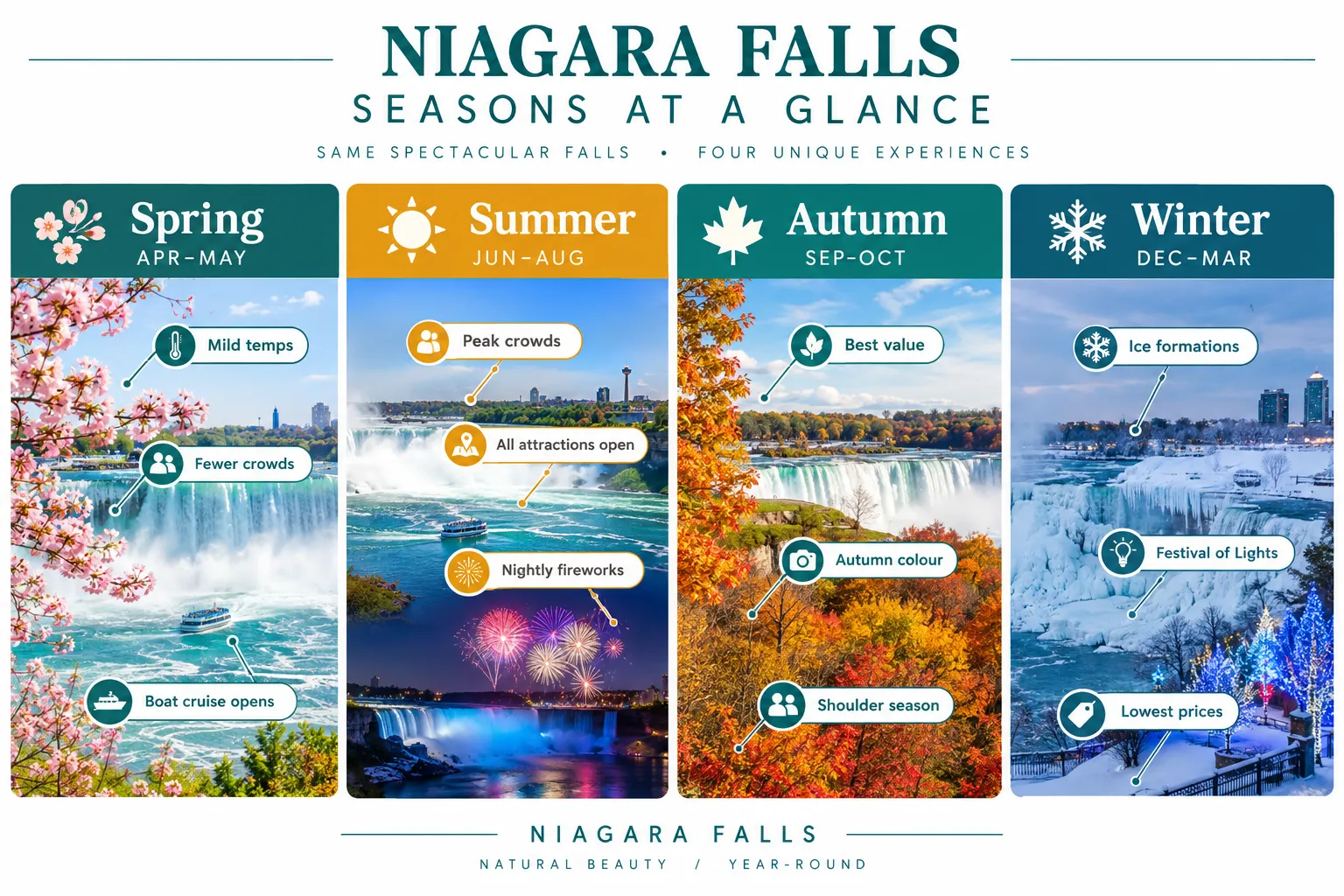
Season-by-Season Comparison Table
| Season | Typical Temps | Crowds | Cost Level | Key Attractions |
|---|---|---|---|---|
| Spring (Apr, May) | 5-18°C | Low, Medium | 💰 Moderate | Boat cruise opens ~April; Journey Behind the Falls; Skylon Tower |
| Summer (Jun, Aug) | 20-30°C | Very High | 💰💰💰 Peak | All attractions; nightly fireworks; illuminations; boat cruise |
| Autumn (Sep, Oct) | 8-22°C | Low, Medium | 💰💰 Good value | Boat cruise still running; foliage; Journey Behind the Falls |
| Winter (Dec, Mar) | −10-2°C | Low | 💰 Cheapest | Journey Behind the Falls; Winter Festival of Lights; ice formations |
Spring (April, May)
Spring is an underrated time to visit. Water flow is often at its highest after winter snowmelt, making the falls look especially powerful. Temperatures climb from around 5°C in early April to a comfortable 18°C by late May. The boat cruise typically resumes in April, and most attractions are open by May long weekend. Crowds are manageable, and you’ll pay noticeably less for hotels than in July or August.
Choose spring if: you want high water flow, reasonable prices, and don’t mind the occasional cool or rainy day.
Summer (June, August)
Summer is peak season, and for good reason. Every attraction is open, the boat cruise runs daily, nightly fireworks light up the sky, and the weather is warm (20-30°C). July and August are the busiest months, especially on weekends and around Canada Day (1 July). Expect queues, higher hotel rates, and the need to book well in advance. That said, if this is your one chance to see Niagara Falls with the full experience, summer delivers it.
Summer humidity note: July and August can be genuinely muggy, with humidity making 28°C feel closer to 35°C. Light, breathable clothing and early morning starts help a lot. See our guide on what time of day to visit Niagara Falls for timing tips.
Choose summer if: you want every attraction open, fireworks, and the classic full-experience visit, and you’re happy to book early.
Autumn (September, October)
September and October are widely considered the sweet spot. Early September still feels like summer, but the crowds thin out noticeably after Labour Day. By mid-October, the maple trees along the gorge turn brilliant shades of orange and red, making for some of the most photogenic conditions of the year. The boat cruise is still running through most of October. Hotel rates drop, and you can often walk up to viewpoints without fighting for space.
October foliage timing: Peak colour in the Niagara region typically falls between mid and late October, though it varies year to year.
Choose autumn if: you want the best balance of good weather, lower prices, fewer crowds, and beautiful scenery.
Winter (December, March)
Winter at Niagara Falls is dramatic in a completely different way. When temperatures drop below −10°C, ice formations build up along the banks and mist freezes on the trees, creating an almost surreal landscape. The Winter Festival of Lights runs through the season with elaborate illumination displays. The boat cruise is closed, but Journey Behind the Falls operates year-round. Hotels are at their cheapest, and the falls feel almost private compared to summer.
Choose winter if: you want low prices, dramatic ice scenery, and a very different kind of Niagara experience. See more tips on a Niagara Falls winter visit.
Best Time for Good Weather at Niagara Falls
The warmest, sunniest weather runs from mid-June through early September, with July and August averaging highs of 26-30°C. May and September offer mild, pleasant conditions without the summer heat or humidity. April and October can be cool and unpredictable, so layering is wise.
Weather by Month (Quick Reference)
- April: 5-13°C, occasional rain, spring freshness
- May: 11-20°C, mild and pleasant, some rain
- June: 16-25°C, warm, mostly sunny
- July: 20-29°C, hot and humid, peak summer
- August: 19-28°C, hot and humid, late-summer feel
- September: 14-23°C, warm days, cooler evenings, low humidity
- October: 7-16°C, crisp, autumn colours, unpredictable
- November, March: −5 to 5°C, cold, possible snow and ice
Best month for weather: July has the highest average temperatures, but September wins overall because the heat is comfortable, humidity is lower, and rain is less frequent.
Niagara Falls Summer Heat and Humidity: How Bad Is It?
Summer humidity is real but manageable. July and August afternoons near the falls can feel oppressive, especially combined with the mist from the falls themselves. Arriving before 10 a.m. or after 4 p.m. makes a significant difference. If you’re sensitive to heat, September is a much more comfortable choice.
Best Time to Avoid Crowds at Niagara Falls
The least crowded times are weekdays in January, February, March, and November. For visitors who want good weather AND fewer crowds, weekdays in September are the sweet spot. Avoid summer weekends, Canada Day weekend (around 1 July), and any long weekend from May through October.
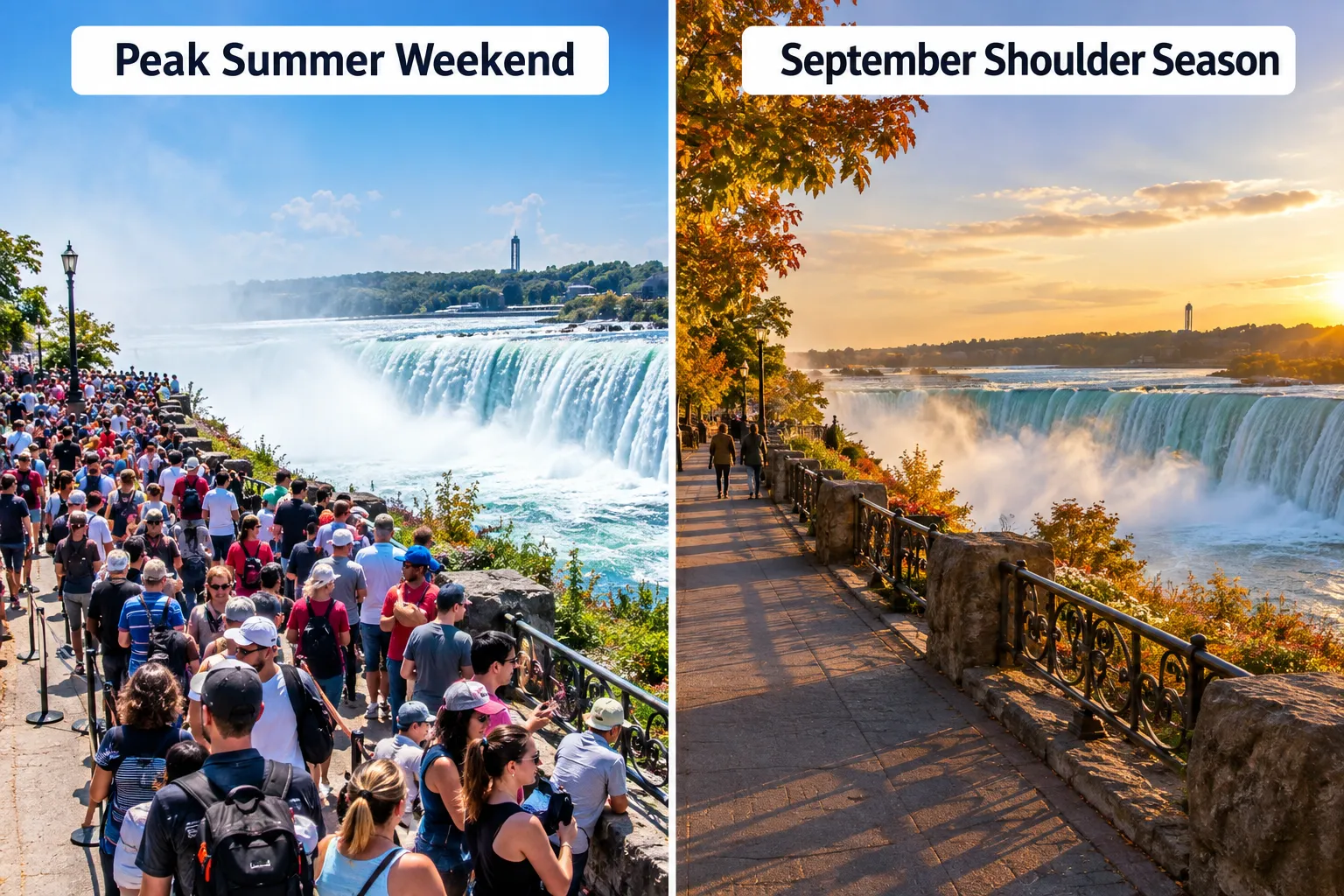
When Is Niagara Falls Most Crowded?
- Busiest overall: July and August, especially weekends
- Busiest single days: Canada Day (1 July), Victoria Day weekend (May), Civic Holiday weekend (August)
- Busy but manageable: June weekdays, early September weekends
For more on navigating busy periods, the Niagara Falls crowd tips resource is worth a read, and if you’re planning around a long weekend, check the Niagara Falls long weekend guide.
Practical tip: Arriving at the falls by 8-9 a.m. in summer means you’ll have the viewpoints largely to yourself for the first hour or two. Crowds peak between 11 a.m. and 4 p.m.
Is Fall or Spring Better for Niagara Falls?
Both are good shoulder seasons, but they suit different priorities:
- Spring (May): Higher water flow, fresh greenery, boat cruise just opened, slightly lower prices than autumn
- Autumn (September, October): Warmer and more settled than spring, stunning foliage, boat cruise still running, arguably better for photos
For most visitors, September edges out May because the weather is more reliable, the foliage is spectacular, and all major attractions are still fully open.
Cheapest Time to Visit Niagara Falls
The cheapest time to visit Niagara Falls is January through February, when hotel rates are at their lowest and tour prices reflect off-season demand. November and early December are also good value. The trade-off is cold weather (often below −5°C) and the boat cruise being closed.
Budget Tips by Season
- Best budget + experience balance: September and October weekdays
- Absolute cheapest: January, February (cold, but dramatic ice scenery)
- Avoid for budget: July, August weekends, long weekends, Canada Day
Booking a guided day tour from Toronto rather than driving and paying for parking, hotel, and individual attraction tickets separately can save money across any season. For a full breakdown, the best Niagara Falls tours from Toronto in 2026 comparison is a useful starting point.
When the Boat Cruise & Attractions Are Open
The Niagara Falls boat cruise (Hornblower/Niagara City Cruises) runs approximately from April through November; it closes during winter due to ice conditions. Journey Behind the Falls is open year-round. The Skylon Tower observation deck is also open year-round. Most other attractions, Clifton Hill, the butterfly conservatory, and similar, operate year-round with reduced winter hours.
Attraction Availability at a Glance
| Attraction | Open Season |
|---|---|
| Boat cruise | ~April, November |
| Journey Behind the Falls | Year-round |
| Skylon Tower | Year-round |
| Niagara Falls illumination | Year-round (nightly) |
| Fireworks | Summer nightly + festival season |
| Winter Festival of Lights | Late November, January |
Niagara Falls Spring Water Level: When Is It Highest?
Water flow at Niagara Falls is highest in spring, typically April through early June, when snowmelt from the Great Lakes watershed swells the Niagara River. This is when the falls look most powerful and the mist is thickest. Note that the flow is also managed under a treaty between Canada and the United States, so it’s consistent during daylight hours throughout the year, but spring snowmelt adds a natural boost.
Best Time for the Illumination & Fireworks
The falls are illuminated every night of the year, so you can see the colourful light show regardless of when you visit. Fireworks are a seasonal event: they run nightly during summer (typically late June through Labour Day) and on special occasions during the Winter Festival of Lights season.
Seasonal Fireworks & Events Calendar
- Summer nightly fireworks: Late June, early September, usually at 10 p.m. (exact schedule varies)
- Canada Day fireworks: 1 July, one of the biggest displays of the year
- Winter Festival of Lights: Late November through January, elaborate illumination displays across the city
- Civic Holiday weekend events: Early August, see the Civic Day long weekend 2026 guide for what’s on
For the latest Niagara Falls fireworks 2026 schedule and event listings, check the official calendar before booking.
Best Time for Niagara Falls Photos and Lighting
- Golden hour (sunrise): Early morning in summer gives soft, warm light with almost no crowds, arguably the best photography window of the year
- Blue hour (just after sunset): The illumination kicks in and the falls glow against a deep blue sky, spectacular for long-exposure shots
- Autumn midday: Overcast autumn days diffuse the light evenly, which works beautifully with the fall foliage
- Winter: Ice formations in the gorge at sunrise, with mist freezing mid-air, produce genuinely unique images
Photography tip: The Canadian side (Horseshoe Falls viewpoint) gives the widest, most dramatic angle. Morning light hits the falls from the east, so sunrise shoots from the Canadian side are especially rewarding.
Visiting Niagara Falls from Toronto: Getting There Any Season
Niagara Falls is approximately 130 km from Toronto, making it a straightforward day trip in any season, roughly 1.5 to 2 hours by road depending on traffic. The QEW (Queen Elizabeth Way) is the main route. Traffic can add 30-60 minutes on summer weekends and holiday Mondays.
Getting There: Options by Season
- Guided day tour (recommended): Door-to-door from Toronto, no parking stress, expert guide, works year-round
- GO Transit: Seasonal train service runs to Niagara Falls from Union Station (check schedules for GO Transit Niagara Falls options)
- Driving: Convenient but parking near the falls is expensive and scarce in summer
- From Mississauga: Similar distance; see the Mississauga to Niagara Falls tour and transport guide for options
Winter driving note: The QEW can be icy between December and March. If you’re not comfortable driving in winter conditions, a guided coach tour is the safer and more relaxed option.
For first-time visitors planning the day, the 1-day Niagara Falls itinerary from Toronto is a practical step-by-step resource.
BG Tours Canada, Guided Tours Year-Round from Toronto
BG Tours Canada is the top-rated guided tour operator running day trips from Toronto to Niagara Falls, with a 4.8-star rating, expert local guides, and air-conditioned coaches. Tours run every season, with the boat cruise included in warmer months and Journey Behind the Falls featured in winter packages.
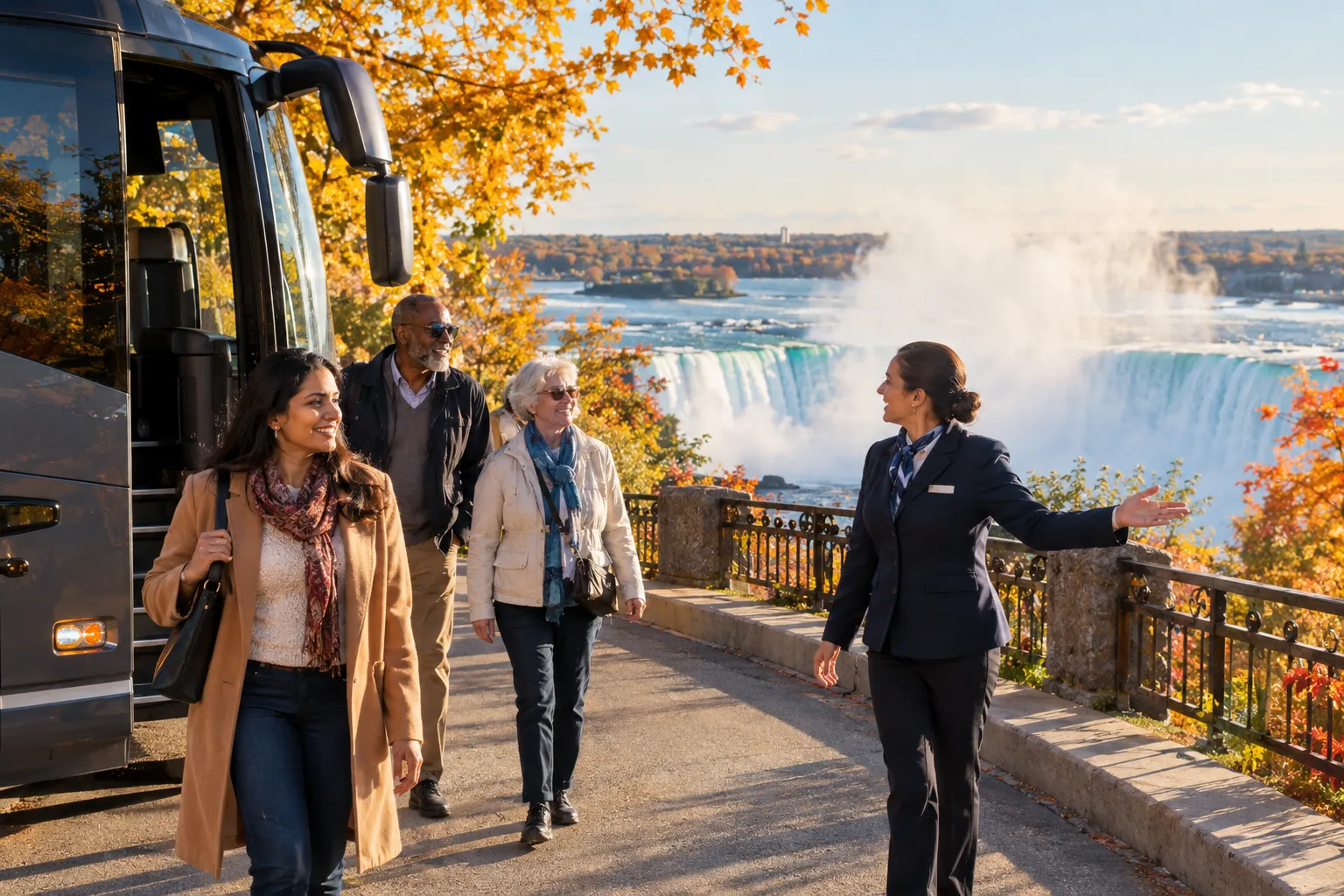
Whether you’re visiting in July for the full summer experience or in January for the ice formations and Festival of Lights, BG Tours has a package that fits. Guides know the best viewpoints, the quietest times to visit each attraction, and how to make the most of a single day, which matters a lot when crowds or weather can shift your plans.
BG Tours Canada Packages (CAD, per adult)
| Package | Price |
|---|---|
| Boat Cruise + Journey Behind the Falls | $110 |
| With Boat Cruise (standard) | $150 |
| Boat + Journey Behind the Falls (premium) | $180 |
| Boat + Journey Behind the Falls + Skylon Tower | $200 |
| Private Tour (4 hours) | $225 |
All packages depart from Toronto. The boat cruise is included in season (approximately April, November); winter tours feature Journey Behind the Falls and the illumination experience instead.
Why book with BG Tours?
- No need to drive, park, or navigate the falls on your own
- Guides provide historical context and local knowledge that you simply won’t get solo
- Exclusive attraction access and pre-arranged entry saves time in queues
- Suitable for all ages, including seniors and visitors with limited mobility (see the best Niagara Falls tours for seniors and limited mobility guide)
📞 Call BG Tours: +1 647 881 1253
🌐 Book online: bgniagaratours.com/our-tours
Interactive Seasonal Planner
🍁 Find Your Best Time to Visit Niagara Falls
Frequently Asked Questions
What is the single best month to visit Niagara Falls?
September is the best overall month. Temperatures are warm (15-22°C), humidity is low, summer crowds have eased off, hotel rates drop, and the early autumn foliage adds colour to the gorge. The boat cruise is still running, and all major attractions are open.
When is Niagara Falls least crowded?
The quietest times are January and February (winter off-season) and weekdays in September and October. The busiest periods are July and August weekends, Canada Day (1 July), and long weekends from May through August.
Does Niagara Falls freeze over completely?
The falls themselves don’t freeze completely, water continues to flow year-round. However, in cold winters (typically January, February), ice bridges and ice formations build up along the banks and in the gorge, and mist freezes on nearby trees, creating a dramatic winter landscape. The last time the falls came close to a full freeze was many decades ago.
Is the boat cruise available in winter?
No. The Niagara Falls boat cruise (Niagara City Cruises) is closed during winter, typically from late November or December through March. Journey Behind the Falls is open year-round and is the recommended winter attraction for getting close to the falls.
How far is Niagara Falls from Toronto, and can I visit in any season?
Niagara Falls is approximately 130 km from Toronto, about 1.5 to 2 hours by road. It’s a practical day trip in every season. Winter driving on the QEW can be icy, so a guided coach tour is a sensible option from December through March.
Is winter worth visiting Niagara Falls?
Yes, for the right traveller. The ice formations are genuinely dramatic, the Winter Festival of Lights is a highlight of the season, prices are at their lowest, and the falls feel almost private. The main trade-off is cold temperatures and no boat cruise. Journey Behind the Falls in winter is a memorable experience.
What time of year is Niagara Falls most beautiful?
Beauty is subjective, but most photographers and regular visitors point to two windows: September, October for the combination of warm light, autumn foliage, and the falls at full flow; and January, February for the surreal ice formations and frozen mist. Summer at night, with the illumination and fireworks, is spectacular in a different way.
How do I book a guided tour from Toronto to Niagara Falls?
BG Tours Canada offers year-round guided day tours from Toronto with packages starting at $110 CAD per adult. Tours include expert local guides, air-conditioned coaches, and pre-arranged attraction access. Book online at bgniagaratours.com/our-tours or call +1 647 881 1253.
Conclusion
There’s no single wrong time to visit Niagara Falls, every season offers something genuine. But if you want the best overall experience in 2026, September is the clear winner: warm weather, manageable crowds, autumn colours, the boat cruise still running, and noticeably lower prices than peak summer. If you can only travel in summer, go on a weekday and arrive early. If winter is your only option, embrace it, the ice scenery is unforgettable.
The most practical decision you can make, regardless of season, is to book a guided tour from Toronto rather than navigating the falls independently. You’ll save time, avoid parking headaches, and get far more out of the day.
Ready to plan your visit? Browse BG Tours Canada’s year-round Niagara Falls packages or call +1 647 881 1253 to find the right tour for your travel dates.


