

Last updated: July 19, 2026
Quick Answer: Niagara Falls remains one of North America’s most visited natural landmarks, drawing an estimated 12 to 14 million visitors annually to the Canadian side alone. This Niagara Falls Travel Guide 2026: Insider Tips for Tours and More covers the best time to visit, which tours are worth your money, what the crowds don’t know, and how to get the most out of every hour you spend there, whether you’re coming for a day or a long weekend.
Key Takeaways
- Late May through early June and September offer the best balance of good weather, manageable crowds, and full attraction access.
- The Canadian side (Ontario) consistently delivers better views, more attractions, and superior tour options compared to the American side.
- A guided tour from Toronto or Hamilton removes parking headaches, saves money on bundled attractions, and adds context that self-guided visits simply can’t match.
- Journey Behind the Falls is genuinely worth it, the tunnel experience is unlike any other viewpoint at the falls.
- Budget at least one full day; two days lets you add Niagara-on-the-Lake, wine country, or evening illumination.
- Winter visits are underrated: fewer crowds, dramatic ice formations, and lower prices across the board.
- Families with children, couples, solo travellers, and seniors all have distinct tour options tailored to their needs.
- Booking attractions in advance, especially during July and August, is no longer optional, it’s essential.
What’s the Best Time to Visit Niagara Falls in 2026
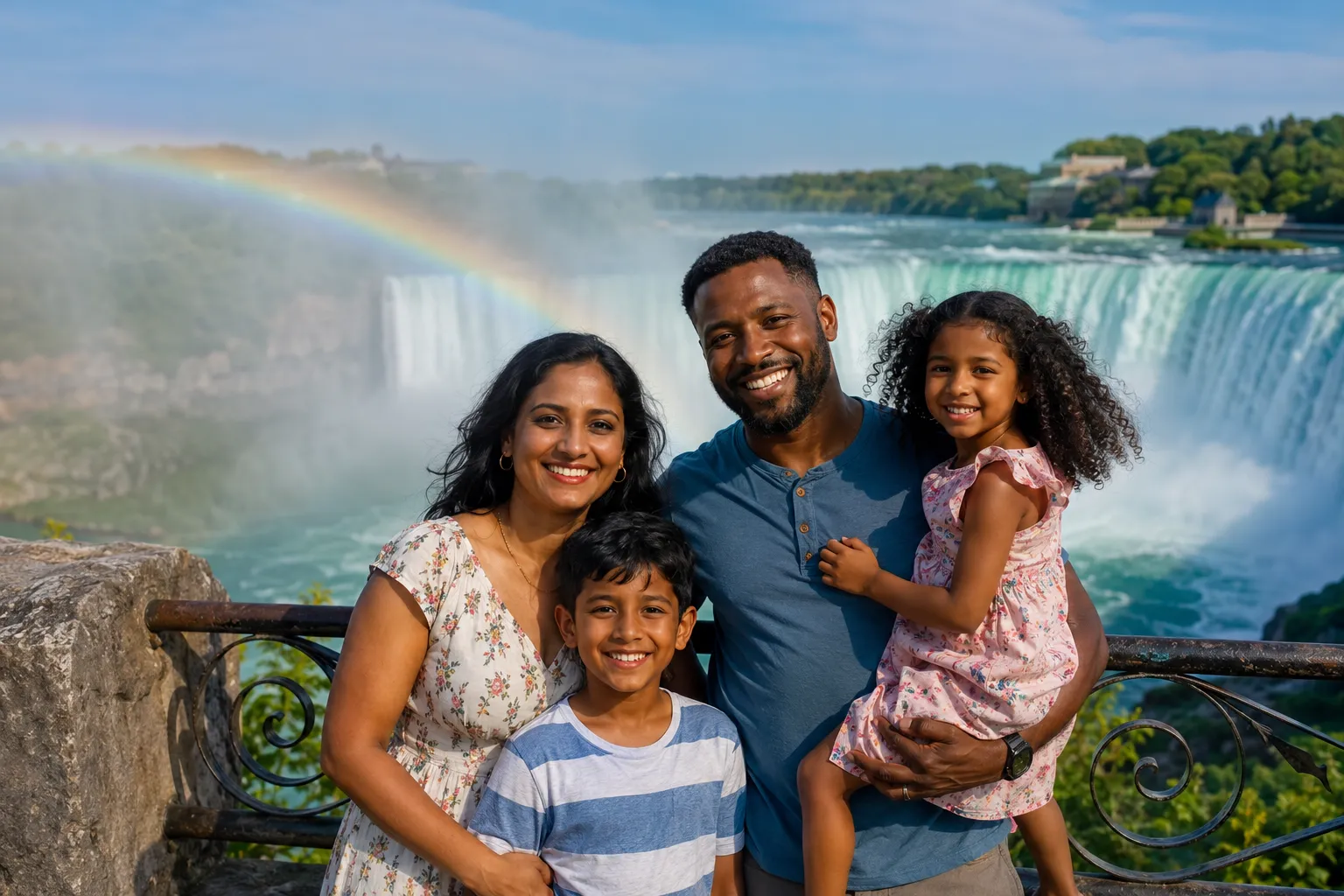
The best time to visit Niagara Falls in 2026 is late May through early June or the month of September. These shoulder periods offer warm temperatures, full access to all attractions, and noticeably thinner crowds compared to peak summer weeks.
Here’s how the seasons break down:
| Season | Crowd Level | Attraction Access | Avg. Temperature |
|---|---|---|---|
| May, June (shoulder) | Low, Moderate | Full | 15-22°C |
| July, August (peak) | Very High | Full | 25-30°C |
| September, October | Moderate | Full | 14-22°C |
| November, April (off-season) | Low | Partial | -5-10°C |
Peak summer (July, August) brings the largest crowds and highest hotel rates. Lineups for the boat cruise and Journey Behind the Falls can stretch to 60-90 minutes without advance booking. If you must visit in summer, arriving early in the morning, before 9 a.m., makes a significant difference.
September is arguably the single best month. The falls are at full flow, the foliage starts turning, and the tourist volume drops sharply after Labour Day.
Common mistake: Many visitors assume the falls look the same year-round. In fact, water flow is partially diverted for hydroelectric generation at night and is reduced further in winter, something worth knowing if you’re chasing dramatic photography.
How Much Does It Cost to Visit Niagara Falls in 2026
A basic visit to the Canadian side of Niagara Falls can cost as little as nothing, walking the Niagara Parkway and viewing the falls from public areas is free. Once you add paid attractions, costs rise quickly.
Typical per-person costs (Canadian side, 2026 estimates):
- Niagara City Cruises (boat tour): approximately CAD $35,$40
- Journey Behind the Falls: approximately CAD $25,$30
- Skylon Tower observation deck: approximately CAD $20,$25
- Niagara Parks Adventure Pass (bundles multiple attractions): approximately CAD $60,$80
A full day with all three major paid attractions runs roughly CAD $80,$100 per adult if booked independently. Guided tour packages, like those offered by BG Tours Canada, bundle transport, attractions, and a knowledgeable guide for a comparable or lower total cost, starting at $110 per adult for a 9-hour Toronto departure that includes the boat cruise and Journey Behind the Falls.
Money-saving tips:
- Book the Niagara Parks Adventure Pass rather than individual tickets.
- Travel on a weekday, some attractions offer modest weekday discounts.
- A guided group tour from Toronto or surrounding cities often undercuts the cost of driving, parking (CAD $25,$35 per day near the falls), and buying attractions separately.
For travellers coming from Toronto, the complete Toronto to Niagara Falls travel guide breaks down every transport option and its true all-in cost.
Niagara Falls Tours: What’s Included and Which One Should You Pick
The right tour depends on your group size, budget, starting point, and how much you want included. Most reputable guided tours cover transport, a narrated journey, and access to two or three major attractions.
BG Tours Canada’s core packages in 2026:
- Toronto to Niagara Falls Tour ($110/adult, 9 hours): Includes coach transport from Toronto, boat cruise, and Journey Behind the Falls. Rated 4.8 out of 5 by past travellers. Best for first-time visitors who want the essentials covered.
- Toronto to Niagara Falls with Boat Cruise ($150/adult, 9 hours): Expands on the base package with Skylon Tower access and additional guided commentary. Best for visitors who want panoramic views added to their experience. See full details on the Toronto to Niagara Falls Tour with Boat Cruise, Journey Behind the Falls, and Skylon Tower page.
- Niagara Falls Private Tour ($225/adult, 4 hours): Small-group, fully guided experience covering the boat cruise, Journey Behind the Falls, and Skylon Tower. Best for couples, families, or travellers who want flexibility and personal attention. Full details at the Niagara Falls Tour, Boat, Journey Behind the Falls, Tower Tour page.
Choose a guided tour if: you’re coming from Toronto or a nearby city, you don’t want to deal with parking, or you’re visiting for the first time and want historical and geological context explained along the way.
Choose self-guided if: you’re already staying in Niagara Falls, you have a vehicle, and you’re comfortable navigating attraction queues independently.
For a broader comparison of operators, the 12 Best Toronto to Niagara Falls Bus Tours Compared (2026) is a useful starting point.
Can You Go Behind Niagara Falls and Is It Worth It
Yes, you can go behind Niagara Falls, and for most visitors it is absolutely worth the added cost. The Journey Behind the Falls experience, operated by Niagara Parks, takes visitors through tunnels carved into the rock directly behind Horseshoe Falls, with viewing portals that place you just metres from the falling water.
What to expect:
- Tunnels descend approximately 38 metres below the falls via elevator.
- Two observation portals look directly into the curtain of falling water.
- The noise and vibration are intense, genuinely unlike anything you experience from surface viewpoints.
- Ponchos are provided but expect to get wet regardless.
- Allow 45-60 minutes for the full experience.
Is it worth it? For first-time visitors, yes. The perspective from behind the falls is something photographs cannot capture. Repeat visitors sometimes skip it, but families with children consistently rate it as the highlight of the day.
Edge case: Visitors with claustrophobia or significant mobility limitations may find the tunnels uncomfortable. The best Niagara Falls tours for seniors and limited mobility covers accessibility considerations in detail.
Niagara Falls in Winter vs. Summer: What’s Different
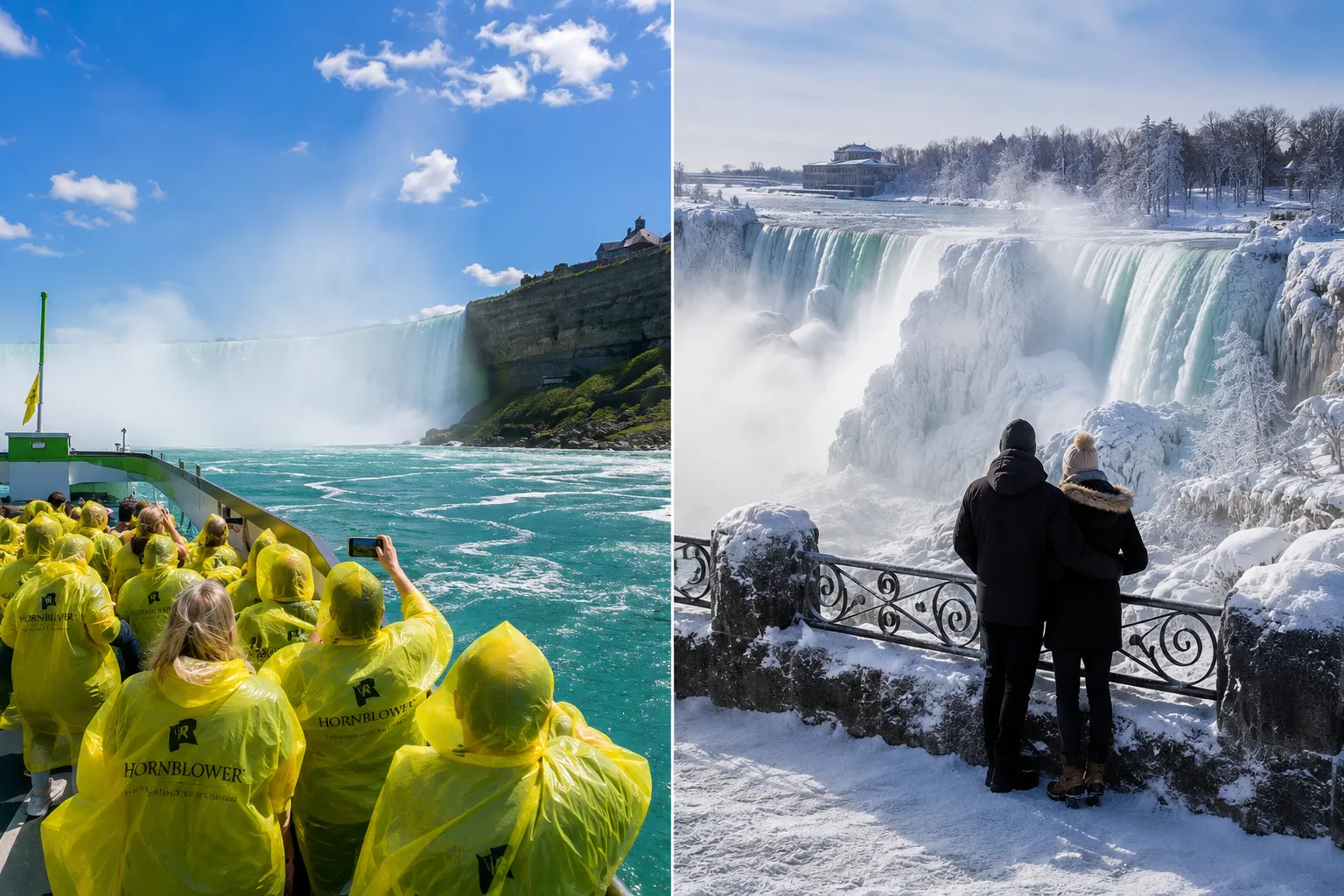
Summer delivers full water flow, all attractions open, and the iconic green-blue colour of the water. Winter offers dramatic ice formations, near-empty pathways, lower prices, and an atmosphere that feels completely different from the peak-season crowds.
Key differences:
- Water volume: Reduced in winter due to hydroelectric diversion; the falls still flow but are less thunderous.
- Ice formations: From late December through February, ice bridges and frozen mist create a surreal landscape that summer visitors never see.
- Crowds: Winter weekdays are genuinely quiet. You can stand at the railing directly in front of Horseshoe Falls with almost no one around you.
- Attraction access: Journey Behind the Falls and the boat cruise operate seasonally, the cruise typically closes from late November to late March. Check current schedules before booking.
- Pricing: Hotels near the falls drop significantly in winter, sometimes by 40-50% compared to July rates.
What to pack for winter: Thermal base layers, waterproof boots with grip (the pathways ice over), a windproof outer layer, and hand warmers. The mist from the falls freezes on surfaces, so footing near the railings can be treacherous.
For dedicated winter trip planning, the Niagara Falls winter tours resource covers seasonal options in detail.
Is Niagara Falls Good for Families with Kids
Niagara Falls is an excellent destination for families. The combination of a dramatic natural spectacle, interactive attractions, and walkable public spaces makes it genuinely engaging for children of most ages.
Family-friendly highlights:
- The boat cruise puts kids inside the mist, universally popular with children.
- Journey Behind the Falls has strong sensory appeal for older children (ages 5 and up tend to love it; very young children may find the noise overwhelming).
- The Niagara Parks pathway along the river is stroller-accessible and free.
- Clifton Hill, just steps from the falls, offers arcades, mini-golf, and family dining.
Practical family tips:
- Book the boat cruise for the morning when energy levels are high.
- Bring a change of clothes for children, ponchos only do so much.
- If you’re travelling from Toronto with a pram, the Toronto to Niagara Falls with a stroller guide covers exactly what to expect on a guided day tour.
- Children under a certain age (typically 3 and under) are often admitted free to Niagara Parks attractions, confirm current age thresholds when booking.
How Many Days Should You Spend at Niagara Falls
One full day is enough to see the core attractions on the Canadian side. Two days allows you to add Niagara-on-the-Lake, wine country, or a relaxed evening illumination experience without rushing.
One-day itinerary (the essentials):
- Morning: Arrive early, walk the parkway to Horseshoe Falls.
- Mid-morning: Boat cruise (book in advance).
- Late morning: Journey Behind the Falls.
- Afternoon: Skylon Tower for panoramic views, lunch at Table Rock.
- Evening: Falls illumination (seasonal, typically dusk until midnight).
Two-day itinerary additions:
- Day 2 morning: Niagara-on-the-Lake historic town (30-minute drive).
- Day 2 afternoon: Niagara wine region, the Niagara Peninsula is one of Canada’s premier wine-growing areas.
- Optional: White Water Walk or Whirlpool Aero Car for a different perspective on the river.
For a structured two-to-three day plan, the Niagara Falls Journeys from Toronto: 2-3 Day Itineraries guide is worth reading before you book.
What’s the Cheapest Way to See Niagara Falls Without Paying for Tours
The cheapest way to see Niagara Falls is to walk the free public sections of the Niagara Parkway and Queen Victoria Park, which offer unobstructed views of both Horseshoe Falls and American Falls at no cost.
Free and low-cost options:
- Queen Victoria Park and the falls viewing area: free, always accessible.
- Niagara Parkway walking path: free, stretches several kilometres along the river.
- Table Rock Welcome Centre exterior: free viewpoint directly above the falls.
- Falls illumination (evening): visible from public areas at no charge.
If budget is tight but you still want one paid experience: Journey Behind the Falls offers the highest unique value per dollar compared to other paid attractions.
Honest caveat: Driving from Toronto, paying for parking, and buying individual attraction tickets can easily cost more than a guided group tour that bundles everything. Before assuming self-guided is cheaper, run the actual numbers. The 5 reasons to book a guided tour to Niagara Falls instead of driving article makes this comparison clearly.
Niagara Falls Weather in 2026: What to Pack
Niagara Falls weather in 2026 follows typical Great Lakes patterns: humid summers, cold winters, and unpredictable shoulder seasons. The mist from the falls adds a layer of dampness regardless of the season.
Packing by season:
- Summer (June, August): Light layers, sunscreen, sunglasses, comfortable walking shoes, and a compact rain jacket. The mist from the boat cruise and viewing platforms will soak light clothing.
- Spring/Fall (April, May, September, October): A mid-weight waterproof jacket is essential. Temperatures can swing 10-15 degrees between morning and afternoon.
- Winter (November, March): Waterproof insulated boots, thermal underlayers, a heavy windproof coat, gloves, and a hat. The wind chill near the falls in January can be severe.
Universal packing list for any season:
- Waterproof outer layer or poncho (ponchos are provided on the boat cruise but not elsewhere)
- Comfortable, non-slip walking shoes
- A small dry bag for phones and cameras near the boat and tunnel areas
- Reusable water bottle (tap water in Ontario is safe to drink)
Best Hotels Near Niagara Falls on a Budget
Budget accommodation near Niagara Falls is most affordable on the Canadian side during shoulder seasons (May, June and September, October). Expect to pay CAD $80,$140 per night for a clean, well-reviewed mid-range hotel outside the immediate Clifton Hill tourist zone.
Budget-friendly areas to consider:
- Lundy’s Lane corridor: 10-15 minutes’ walk from the falls, significantly cheaper than Clifton Hill hotels.
- Ferry Street area: Quiet, residential-adjacent, with easy access to the parkway.
- Niagara Falls, NY (American side): USD pricing can work in favour of Canadian visitors due to exchange rates, though the views and attractions are better on the Canadian side.
Tips for saving on accommodation:
- Book at least 6-8 weeks ahead for summer visits; prices spike sharply in June.
- Check rates Sunday through Thursday, weekend rates near tourist attractions are consistently higher.
- Consider staying in St. Catharines (20 minutes away) for lower nightly rates if you have a vehicle or are joining a guided tour.
What People Get Wrong About Visiting Niagara Falls
The most common mistake visitors make is assuming the American side offers a comparable experience to the Canadian side. It does not. The Canadian (Ontario) side provides dramatically better views, more attractions, and superior infrastructure for tourists.
Other things visitors consistently get wrong:
- Assuming one hour is enough. The falls themselves take minutes to see, but the full experience, boat cruise, tunnel, tower, requires a full day minimum.
- Skipping advance booking in summer. Walk-up queues for the boat cruise in July and August can mean a 90-minute wait. Book online the night before at minimum.
- Overlooking the evening illumination. The falls are lit in rotating colours from dusk until midnight during peak season. It’s free to watch from public areas and is genuinely spectacular.
- Ignoring Niagara-on-the-Lake. Just 20 kilometres away, this historic town is one of the most charming destinations in Ontario and is almost always skipped by day-trippers.
- Wearing expensive shoes. The mist near the falls soaks everything. Wear shoes you don’t mind getting wet.
- Driving when a guided tour makes more sense. Parking near the falls is expensive and stressful. Guided tours from Toronto eliminate this entirely while adding expert commentary.
Niagara Falls Travel Tips Locals Don’t Want You to Know
The best-kept local secret is that the falls look most dramatic in the early morning, before 8 a.m., when the mist catches the low-angle light and the crowds have not yet arrived. This is when photographers get their best shots.
More insider tips:
- The Canadian side Table Rock viewpoint is free and closer to Horseshoe Falls than most people realise. You don’t need to pay for anything to stand within 10 metres of the falls’ edge.
- Niagara Parks’ free shuttle (WEGO bus) connects all major attractions. A day pass costs around CAD $10,$12 and saves significant walking time.
- The Skylon Tower revolving restaurant serves Sunday brunch at a price point far below dinner rates. The view is identical.
- Niagara-on-the-Lake’s main street is free to explore and has better food and wine options than anything on Clifton Hill.
- Weekday mornings in September are the single least-crowded time to visit the major paid attractions, Journey Behind the Falls in particular.
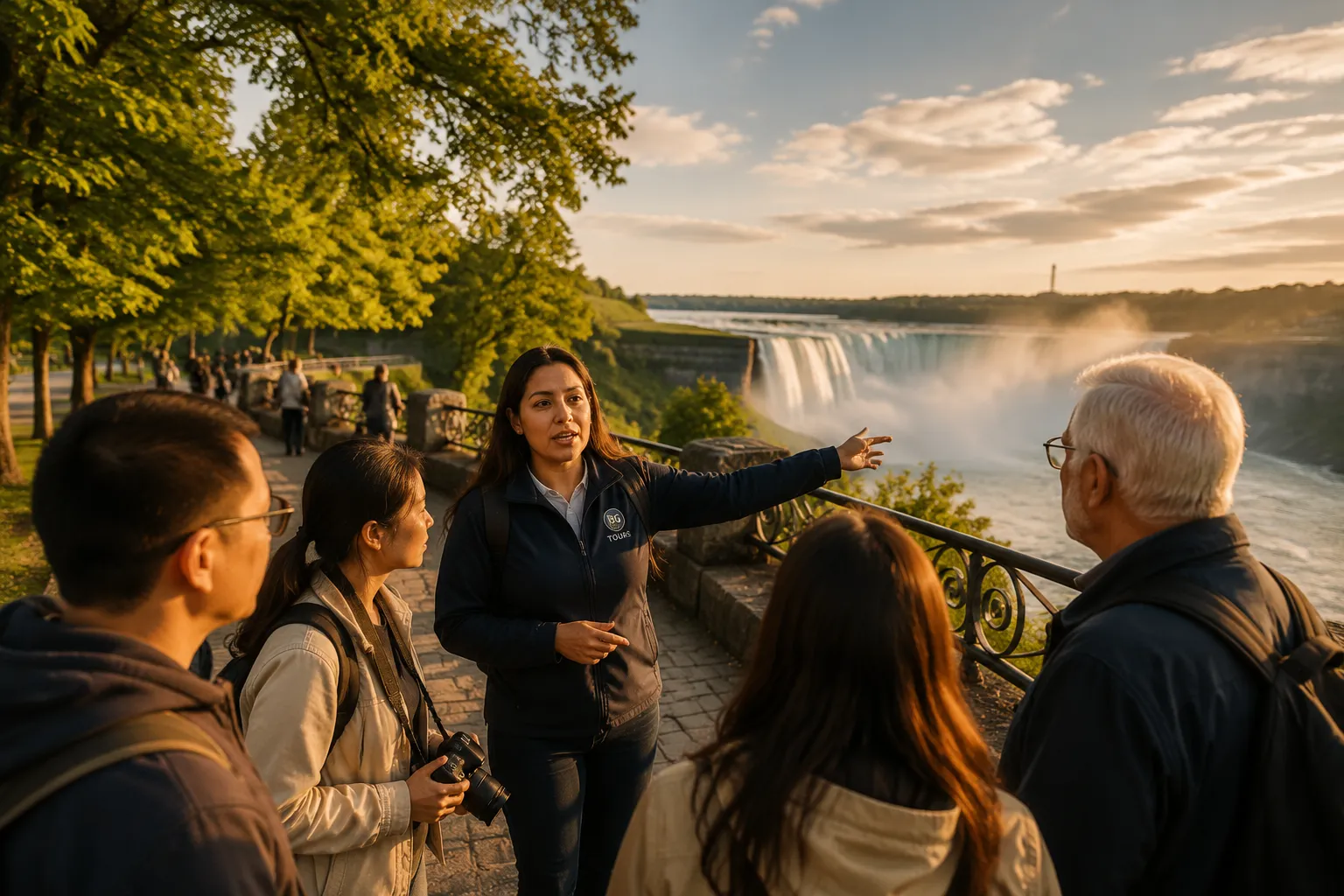
- BG Tours Canada’s expert guides share historical and geological context that transforms what could be a generic waterfall visit into a genuinely educational experience, including the stories of daredevils who attempted the falls and the engineering history behind the hydroelectric diversion.
For travellers coming from specific cities, dedicated guides are available: Hamilton to Niagara Falls and Brampton to Niagara Falls cover local departure options in full.
Can You Visit Niagara Falls If You’re Not a Big Waterfall Person
Yes, and this is one of the most underappreciated aspects of the destination. Niagara Falls as a region offers far more than the waterfalls themselves, including wine tours, historic towns, culinary experiences, and outdoor adventure.
Non-waterfall reasons to visit:
- Niagara wine country: The Niagara Peninsula produces world-class ice wine and Riesling. Dozens of wineries offer tastings within a 30-minute drive of the falls.
- Niagara-on-the-Lake: A beautifully preserved 19th-century town with independent shops, fine dining, and the Shaw Festival theatre.
- White Water Walk and Whirlpool: The Niagara Gorge downstream from the falls offers dramatic scenery that has nothing to do with the falls themselves.
- Culinary scene: The Niagara region has developed a serious farm-to-table restaurant culture over the past decade.
- Cycling: The Niagara Parkway cycling path is one of the most scenic routes in Ontario.
The 25 things to do in Niagara Falls beyond the falls guide covers the full range of non-waterfall experiences in detail.
Niagara Falls vs. Other Waterfalls: Which Is Better
Niagara Falls is not the tallest or the widest waterfall in the world, but it is arguably the most accessible and most comprehensively developed for visitors. The combination of raw volume, proximity to major cities, and the surrounding infrastructure makes it unique.
Quick comparison:
- Victoria Falls (Zambia/Zimbabwe): Taller and wider, but requires international travel and significant logistical planning.
- Iguazu Falls (Argentina/Brazil): Arguably more visually dramatic from certain angles, but also requires long-haul travel.
- Niagara Falls: Reachable from Toronto in under 90 minutes, fully accessible year-round, with world-class guided tour infrastructure and no visa requirements for most North American travellers.
The honest answer: Niagara Falls wins on accessibility, value, and the depth of the surrounding visitor experience. For travellers based in Canada or the northeastern United States, no other waterfall destination comes close in terms of what you get per dollar and per hour of travel time.
FAQ: Niagara Falls Travel Guide 2026
Q: Do I need a passport to visit Niagara Falls on the Canadian side? A: Canadian citizens and permanent residents do not need a passport to visit Niagara Falls, Ontario. International visitors and US citizens crossing from the American side do need valid travel documents. Check current border requirements before travelling.
Q: Is the Canadian side or American side better for visiting? A: The Canadian side is better for the vast majority of visitors. Horseshoe Falls, the boat cruise, Journey Behind the Falls, and Skylon Tower are all on or accessible from the Canadian side, and the viewing angles are significantly superior.
Q: How do I get from Toronto to Niagara Falls without a car? A: Guided coach tours are the most convenient option. GO Transit also operates seasonal bus service. For a full breakdown of every option, see the how to get from Toronto to Niagara Falls guide.
Q: Are the falls illuminated at night? A: Yes. Niagara Falls is illuminated in rotating colours from dusk until midnight during peak season (roughly May through October) and on select dates in winter. The illumination is visible from public areas at no cost.
Q: Is the Skylon Tower worth the price? A: For first-time visitors, yes. The observation deck provides a 360-degree view that contextualises the entire Niagara region. The full Skylon Tower review covers what you get at each price point.
Q: Can I visit Niagara Falls in one day from Toronto? A: Yes. A guided day tour from Toronto typically departs around 8-9 a.m. and returns by early evening, covering all three major attractions comfortably. See the 1-day Niagara Falls itinerary from Toronto for a detailed schedule.
Q: What is the best tour for a romantic trip to Niagara Falls? A: The private small-group tour is the best option for couples, offering flexibility, personalised attention, and the ability to linger at viewpoints without group timing constraints.
Q: Are there tours available for travellers with mobility limitations? A: Yes. Several tour operators, including BG Tours Canada, accommodate guests with mobility needs. The best Niagara Falls tours for seniors and limited mobility provides specific guidance.
Q: When do the falls freeze over? A: The falls themselves do not fully freeze, water continues to flow year-round. However, the mist and spray create significant ice formations on surrounding surfaces, railings, and trees from late December through February, creating a dramatic winter landscape.
Q: Is Niagara Falls safe for solo travellers? A: Yes. The Canadian side is well-policed, well-lit, and heavily visited. Standard urban precautions apply on Clifton Hill at night, but the falls area and parkway are safe at all hours.
Q: How far in advance should I book a guided tour? A: For summer visits (July, August), book at least 2-3 weeks in advance. For shoulder season, 1 week is usually sufficient. Private tours should be booked further ahead as availability is more limited.
Q: What events are happening at Niagara Falls in 2026? A: 2026 brings several notable additions to the Niagara calendar. The New Niagara Falls Salsa Festival 2026 is one highlight, along with expanded summer programming. Check the BG Tours Canada events section for current listings.
Conclusion
This Niagara Falls Travel Guide 2026: Insider Tips for Tours and More has covered the full picture, from the best time to visit and what it actually costs, to which tours deliver genuine value and what most visitors get wrong. The core message is straightforward: plan ahead, choose the Canadian side, book your attractions in advance during summer, and consider a guided tour if you’re coming from Toronto or the surrounding region.
Actionable next steps:
- Decide on your travel dates using the seasonal breakdown above. September is the single best month for most visitors.
- Choose a tour package that matches your group size and interests. BG Tours Canada’s packages start at $110 per adult and cover all three major attractions with expert guided commentary.
- Book your boat cruise and Journey Behind the Falls tickets before you travel, walk-up queues in summer are long.
- If you’re travelling with family, a group, or from a specific city like Hamilton, Brampton, or Mississauga, use the dedicated city guides to find the most efficient departure option.
- Contact BG Tours Canada directly at +1 647 881 1253 or info@bgniagaratours.com to confirm availability and get any questions answered before you book.
Niagara Falls rewards visitors who prepare. With the right tour, the right timing, and a few insider tips in your back pocket, the experience goes well beyond what the standard tourist brochure describes.



