
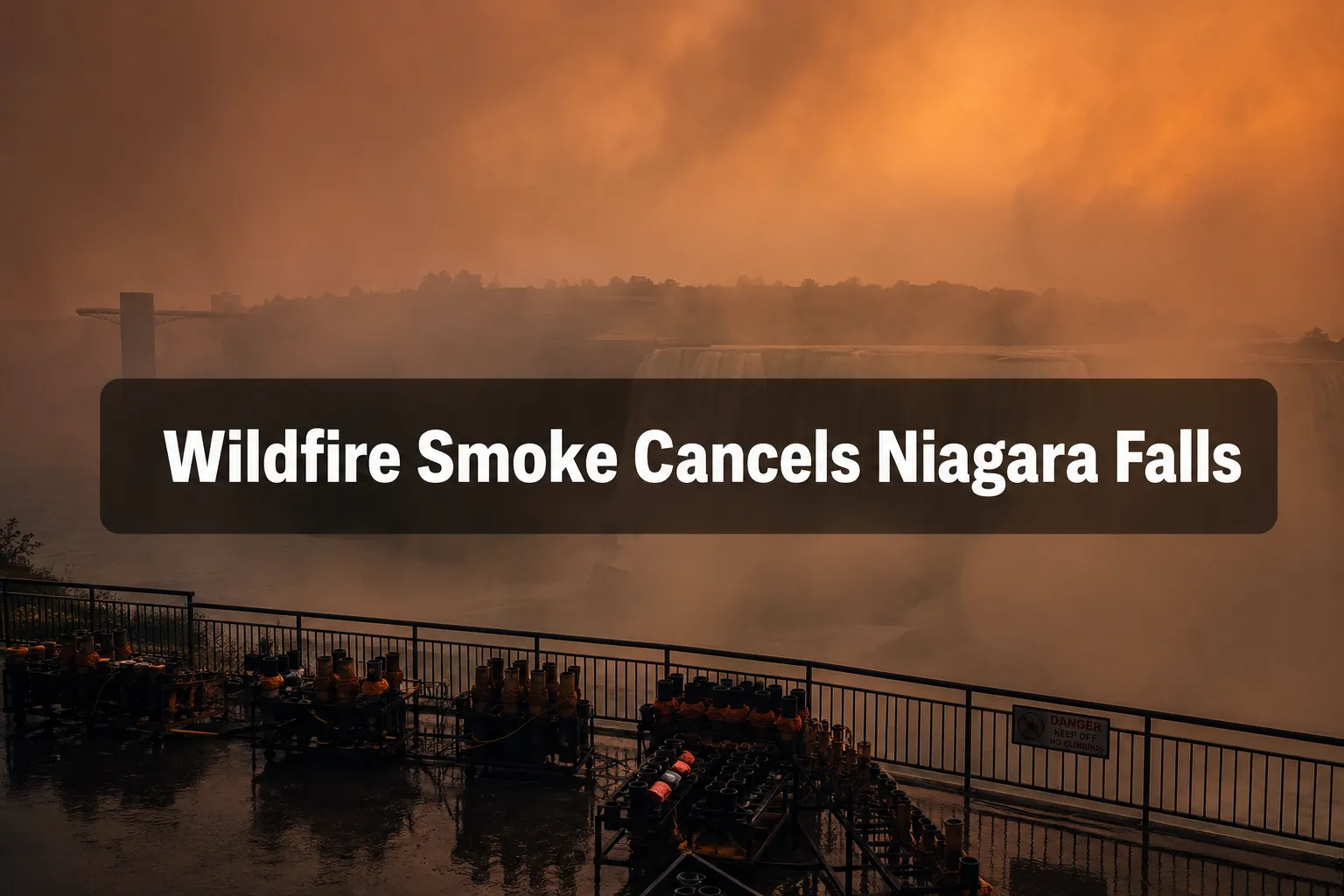
Last updated: July 17, 2026
Quick Answer: On July 15-16, 2026, wildfire smoke from Canadian wildfires pushed the Air Quality Index (AQI) in Niagara Falls to a peak of 330, firmly in the “very unhealthy” category. As a direct result, the nightly fireworks display was paused indefinitely and Rainbow Air Helicopter Tours suspended operations for safety reasons. Niagara Falls State Park remained open, and most ground-level attractions including the Maid of the Mist continued to operate. Visitors should monitor air quality updates daily before heading out and consider indoor alternatives until conditions improve.
Key Takeaways
- The AQI at Niagara Falls reached 330 at 6 a.m. on July 16, 2026, classified as “very unhealthy,” a level that poses health risks to all people, not just sensitive groups. [2]
- Niagara Falls nightly fireworks (normally running at 10 p.m. through October 12) were paused on July 15, 2026, and will resume only when air quality improves. [1]
- Rainbow Air Helicopter Tours halted all flights on July 16, 2026, citing safety concerns tied directly to the “very unhealthy” air quality designation. [2]
- The New York State Department of Health confirmed that AQI readings above 200 are dangerous for the entire general population, not just children, seniors, or those with respiratory conditions. [2]
- Niagara Falls State Park and the Maid of the Mist boat cruise continued operating despite the smoke advisory. [2]
- This is not the first time wildfire smoke has forced cancellations at Niagara Falls, similar disruptions occurred in June 2023. [3]
- Visitors planning trips should check the AirNow.gov AQI forecast daily and have a flexible itinerary with indoor fallback options.
- If your booked tour or ticketed event is cancelled due to air quality, contact the operator directly about rescheduling or refund policies.
What Does “Very Unhealthy” Air Quality Actually Mean?
“Very unhealthy” is a specific AQI classification covering readings between 201 and 300, indicating that the entire general population, not just people with health conditions, faces a significant risk of adverse health effects from outdoor air exposure. When AQI climbs above 300, as it did in Niagara Falls on July 16, 2026 (reaching 330), the air enters “hazardous” territory even by that elevated standard. [2]
The AQI scale, maintained by the U.S. Environmental Protection Agency, runs from 0 to 500 and is divided into six color-coded categories:
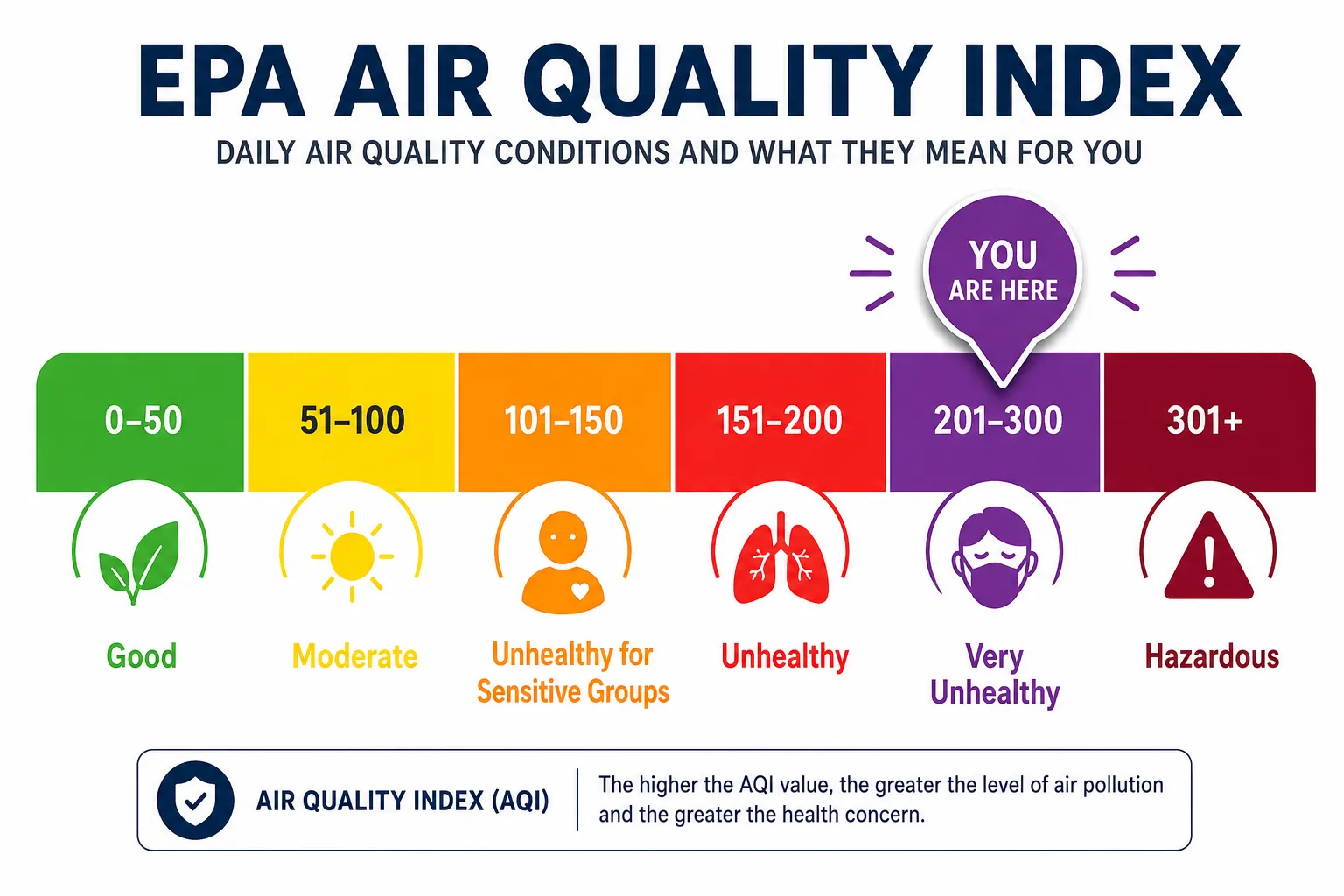
| AQI Range | Category | Who Is at Risk |
|---|---|---|
| 0-50 | Good | No significant risk |
| 51-100 | Moderate | Very sensitive individuals |
| 101-150 | Unhealthy for Sensitive Groups | Children, elderly, people with asthma |
| 151-200 | Unhealthy | Everyone may begin to experience effects |
| 201-300 | Very Unhealthy | Entire general population at high risk |
| 301-500 | Hazardous | Emergency conditions; everyone affected |
New York State Department of Health Commissioner James V. McDonald specifically noted that readings above 200 affect all individuals, emphasizing that healthy adults should not assume they are immune to smoke-related health effects at these levels. [2]
The key distinction: At “unhealthy” levels (151-200), healthy adults might tolerate brief outdoor exposure. At “very unhealthy” levels (201-300) and above, even short periods of outdoor activity carry measurable health risk for everyone. The Niagara Falls reading of 330 on July 16 placed the area well beyond the “very unhealthy” threshold.
How Bad Is Wildfire Smoke for Your Health?
Wildfire smoke is more dangerous than typical urban air pollution because it contains a concentrated mix of fine particulate matter (PM2.5), carbon monoxide, nitrogen oxides, and volatile organic compounds. PM2.5 particles are small enough to penetrate deep into the lungs and enter the bloodstream.
Short-term health effects at “very unhealthy” AQI levels include:
- Burning or irritated eyes, nose, and throat
- Persistent coughing and wheezing
- Shortness of breath during light activity
- Headaches and dizziness
- Aggravated asthma and other respiratory conditions
- Increased cardiovascular strain in older adults
Longer or repeated exposure at these levels can worsen chronic lung disease, trigger asthma attacks, and increase the risk of heart events in vulnerable populations. Children are especially susceptible because their lungs are still developing and they breathe more air relative to their body weight than adults do.
Common mistake: Many visitors assume that because they feel fine initially, the air is safe. Wildfire smoke effects can be delayed, irritation and inflammation often peak hours after exposure, not during it.
Why the ‘Very Unhealthy’ Wildfire Smoke Cancelled Niagara Falls Fireworks and Helicopter Tours
The “very unhealthy” wildfire smoke designation directly triggered the cancellation of Niagara Falls fireworks and helicopter tours because both activities involve significant outdoor exposure at altitude or open-air settings where smoke concentration is highest.
Fireworks: Niagara Falls officials announced on July 15, 2026, that the nightly fireworks program, normally running at 10 p.m. every evening through October 12, would be paused until air quality conditions improved. [1] Fireworks add combustion byproducts to an already compromised atmosphere, and large outdoor crowds gathered to watch them would face sustained exposure to hazardous air. The City of Niagara Falls Fireworks By-law already requires displays to meet safety conditions, and the current advisory made operation untenable. [5]
Helicopter Tours: Rainbow Air Helicopter Tours suspended all operations on July 16, 2026. [2] Flying through wildfire smoke at low altitude poses direct risks to both pilots and passengers, reduced visibility, engine intake contamination, and the concentration of particulates at altitude all factored into the decision. Unlike a ground-level walk that can be cut short, a helicopter tour commits passengers to sustained exposure in an enclosed cabin with limited air filtration.
This pattern is not new. In June 2023, Niagara Falls fireworks were similarly cancelled when Canadian wildfire smoke blanketed the region under comparable conditions. [3] The recurrence in 2026 underscores that wildfire smoke disruptions are becoming a recurring seasonal risk for the area, not an isolated incident.
What Is the Difference Between “Unhealthy” and “Very Unhealthy” Air?
The practical difference between “unhealthy” (AQI 151-200) and “very unhealthy” (AQI 201-300) is significant for outdoor activity decisions. At “unhealthy” levels, health officials typically advise sensitive groups to avoid prolonged outdoor exertion while healthy adults can still manage brief outdoor activity with caution. At “very unhealthy” levels, the advisory expands to the entire population, everyone is advised to limit outdoor time, and strenuous activity outdoors is strongly discouraged for all age groups.
The Niagara Falls reading of 330 on July 16, 2026, technically crossed into “hazardous” territory (301-500), making it one of the more severe smoke events the region has experienced. [2] At hazardous levels, health agencies typically recommend that everyone remain indoors with windows closed and air purifiers running.
Choose your activity based on this rule:
- AQI below 100: Normal outdoor activity is fine for most people.
- AQI 100-150: Sensitive groups should limit extended outdoor time.
- AQI 151-200: Everyone should reduce prolonged outdoor exertion.
- AQI above 200: Avoid outdoor activity; move plans indoors.
- AQI above 300: Stay indoors; keep windows and doors closed.
Can You Still Visit Niagara Falls During Unhealthy Air Quality?
Yes, visiting Niagara Falls during an air quality advisory is possible, but it requires careful planning and realistic expectations about what will be open. Despite the “very unhealthy” conditions on July 16, 2026, Niagara Falls State Park remained open and the Maid of the Mist boat cruise continued operating. [2]
What typically stays open during smoke advisories:
- Indoor attractions (tunnels, observation decks with enclosed viewing areas, museums)
- Boat cruises (operators may continue at their discretion, though outdoor deck exposure is a factor)
- Restaurants, shops, and covered walkways
- Enclosed observation towers with climate-controlled interiors
What typically closes or pauses:
- Outdoor fireworks displays
- Helicopter and aerial tours
- Open-air concerts and festivals
- Prolonged outdoor walking tours
If you are visiting with children, elderly family members, or anyone with asthma or a respiratory condition, an air quality advisory day is not the right time for extended outdoor exploration. Plan for shorter outdoor exposure windows and prioritize indoor experiences.
For visitors coming from Toronto, a guided Niagara Falls tour with an experienced operator gives you the flexibility to adapt your itinerary in real time, something a self-drive trip often cannot offer. Knowledgeable guides can redirect a group to indoor highlights quickly when conditions shift.
How Long Does Wildfire Smoke Last in an Area Like Niagara Falls?
Wildfire smoke duration at any given location depends on wind patterns, the location and scale of active fires, and weather systems moving through the region. A smoke event can last anywhere from a few hours to several days. The June 2023 event that cancelled Niagara Falls fireworks lasted approximately one day before conditions improved enough to resume the program. [3]
Factors that clear smoke faster:
- Strong, sustained winds shifting direction away from the smoke source
- Rain, which scrubs particulates from the atmosphere
- A cold front moving through the region
Factors that prolong smoke events:
- Stagnant high-pressure systems that trap smoke near ground level
- Active wildfires continuing to generate new smoke
- Temperature inversions that keep smoke from dispersing vertically
Practical guidance: Check the AirNow.gov forecast (for U.S. visitors) or the Government of Canada’s Air Quality Health Index (AQHI) tool for Canadian-side conditions. Both provide hourly forecasts up to 48 hours ahead. Do not rely on a single morning reading, AQI can shift dramatically within hours, as the Niagara Falls peak of 330 at 6 a.m. on July 16 demonstrated. [2]
When Will Niagara Falls Fireworks Be Rescheduled?
As of July 17, 2026, no specific reschedule date has been announced for the Niagara Falls nightly fireworks program. Officials stated the program will resume when air quality conditions improve to safe levels. [1] The fireworks are not rescheduled to a specific makeup date, they simply resume on the next eligible evening once the advisory lifts.
The standard fireworks schedule runs nightly at 10 p.m. through October 12. [1] This means visitors have a long window to catch the display later in the season if current conditions prevent it. The best approach is to:
- Monitor the official Niagara Falls USA tourism channels and Niagara Parks social media for resumption announcements.
- Check AQI forecasts the day before your planned visit.
- Build flexibility into your itinerary so a smoke day does not derail your entire trip.
If you have planned a visit specifically around the fireworks, for example, as part of a romantic evening or a family celebration, consider booking a Niagara Falls day and night tour that includes multiple attractions, so the evening component is not the only highlight of your day.
Niagara Falls Events Cancelled This Week: What Else Is Affected?
The wildfire smoke disruptions in July 2026 come on top of an already eventful year for Niagara Falls event cancellations. Earlier in 2026, the “Thunder of Niagara” air show, scheduled for June, was cancelled due to operational demands tied to ongoing military missions overseas, unrelated to air quality. [4]
The July smoke event directly affected:
- Nightly fireworks (paused July 15, 2026) [1]
- Rainbow Air Helicopter Tours (suspended July 16, 2026) [2]
Attractions confirmed as continuing to operate during the July 16 smoke advisory:
- Niagara Falls State Park (open)
- Maid of the Mist boat cruise (operating) [2]
- Indoor visitor facilities and tunnels
For the most current event status, visitors should check directly with individual operators. Tour companies and attraction websites typically post same-day updates when conditions change.
What Air Quality Index Level Closes Outdoor Attractions?
There is no single universal AQI threshold that automatically closes outdoor attractions, decisions are made by individual operators and local authorities based on their own safety assessments and liability considerations. That said, a clear pattern has emerged:
- AQI below 150: Most outdoor attractions operate normally.
- AQI 150-200: Some operators begin voluntary restrictions, especially for aerial activities.
- AQI above 200 (“Very Unhealthy”): Aerial tours, fireworks, and open-air events are most likely to suspend operations. Ground-level attractions may remain open.
- AQI above 300 (“Hazardous”): Most responsible operators will suspend outdoor activities entirely.
Rainbow Air Helicopter Tours suspended at an AQI of 330, consistent with this pattern. [2] The fireworks program was paused a day earlier, when the advisory was already trending toward “very unhealthy” levels. [1]
Edge case to know: Even when attractions remain technically open during a smoke advisory, individual visitors have every right to make their own decision not to participate. If you have pre-booked a tour or attraction and choose not to attend due to air quality, the refund or rescheduling outcome depends entirely on the operator’s cancellation policy, which leads directly to the next question.
Refunds for Cancelled Niagara Falls Tours and Tickets: What to Expect
When a tour or attraction is cancelled by the operator, as happened with helicopter tours and fireworks on July 15-16, 2026, visitors are generally entitled to a refund or rescheduling option. When a visitor chooses not to attend an open attraction due to personal health concerns, the outcome depends on the booking terms.
If the operator cancels:
- Most reputable tour companies and attraction operators will offer a full refund or a complimentary rescheduled booking.
- Contact the operator directly as soon as possible, do not wait days after the cancellation.
- Keep your booking confirmation and any communication about the cancellation.
If you choose not to attend (attraction remains open):
- Review the cancellation policy at the time of booking. Many operators offer flexible rescheduling within a set window.
- Air quality advisories may qualify as extenuating circumstances with some operators, it is worth asking directly.
- Travel insurance policies that include “cancel for any reason” coverage may apply; check your policy documents.
For BG Tours bookings: Contact BG Tours Canada directly at info@bgniagaratours.com or +1 647 881 1253 to discuss options. The team monitors conditions actively and works with guests to find the best solution when weather or environmental events affect planned tours.
How to Protect Yourself From Wildfire Smoke Exposure at Niagara Falls
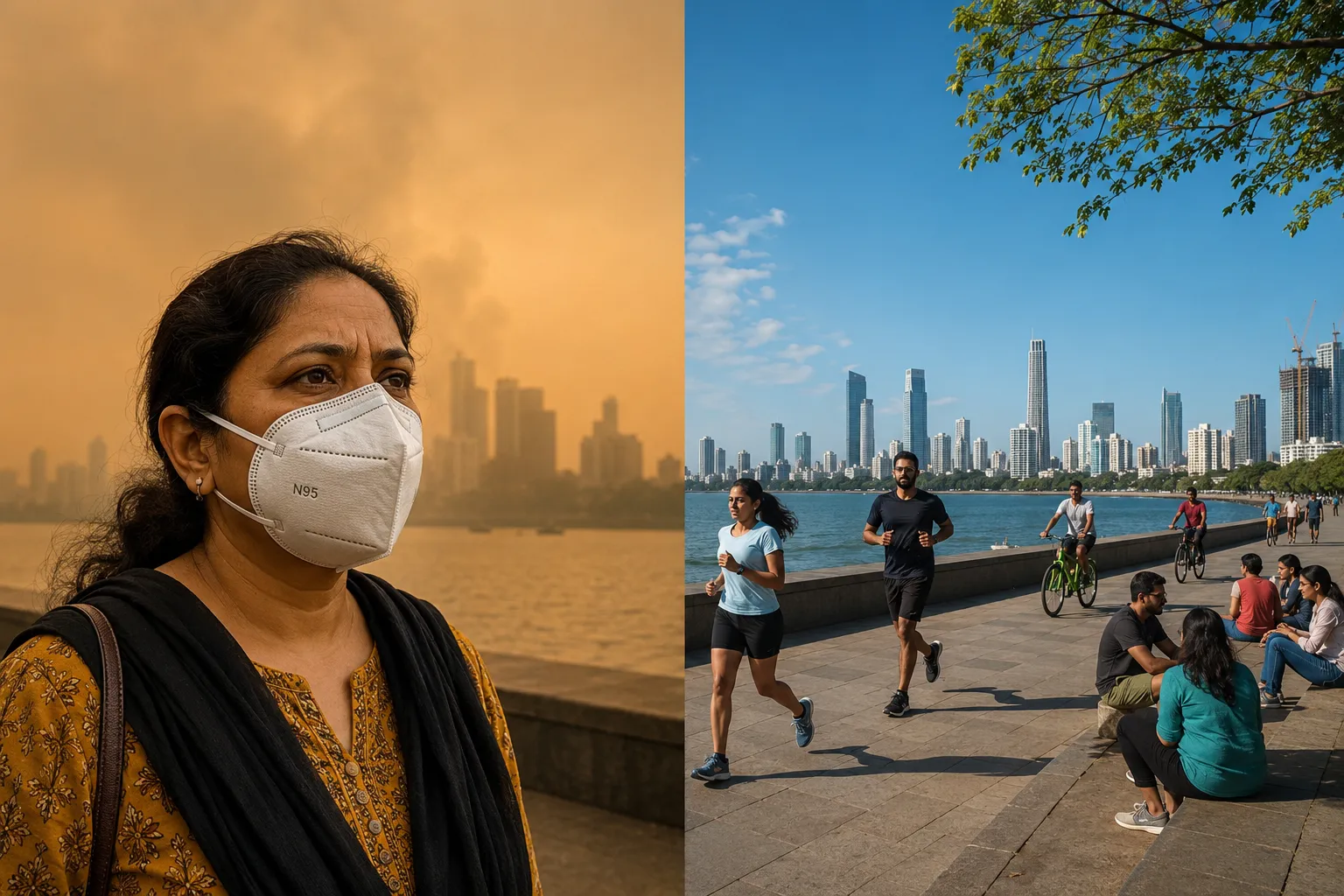
Protecting yourself from wildfire smoke is straightforward when you follow a few consistent practices. The goal is to reduce the amount of PM2.5 you inhale, both outdoors and indoors.
Outdoors:
- Wear an N95 or KN95 respirator mask, cloth masks and surgical masks do not filter fine particulate matter effectively.
- Limit time outdoors during peak smoke hours (often morning and evening when temperature inversions trap smoke near ground level).
- Avoid strenuous activity outdoors; heavier breathing increases particulate intake.
- Keep children and elderly family members indoors as much as possible.
Indoors:
- Keep windows and doors closed.
- Run an air purifier with a HEPA filter if available.
- Avoid activities that add indoor pollutants (candles, gas stoves, smoking).
- Stay hydrated, dry, irritated airways are more vulnerable to smoke damage.
Before your trip:
- Check AirNow.gov (U.S.) or the Government of Canada’s AQHI tool the morning of your visit.
- Pack N95 masks as a standard part of your travel kit during wildfire season (typically June through September in the Great Lakes region).
- Build indoor alternatives into your itinerary from the start.
Niagara Falls Indoor Alternatives During Wildfire Smoke
When outdoor conditions are hazardous, Niagara Falls still offers compelling indoor and semi-enclosed experiences that keep your visit worthwhile. Choosing a tour that includes indoor highlights is the smartest move on a smoke day.
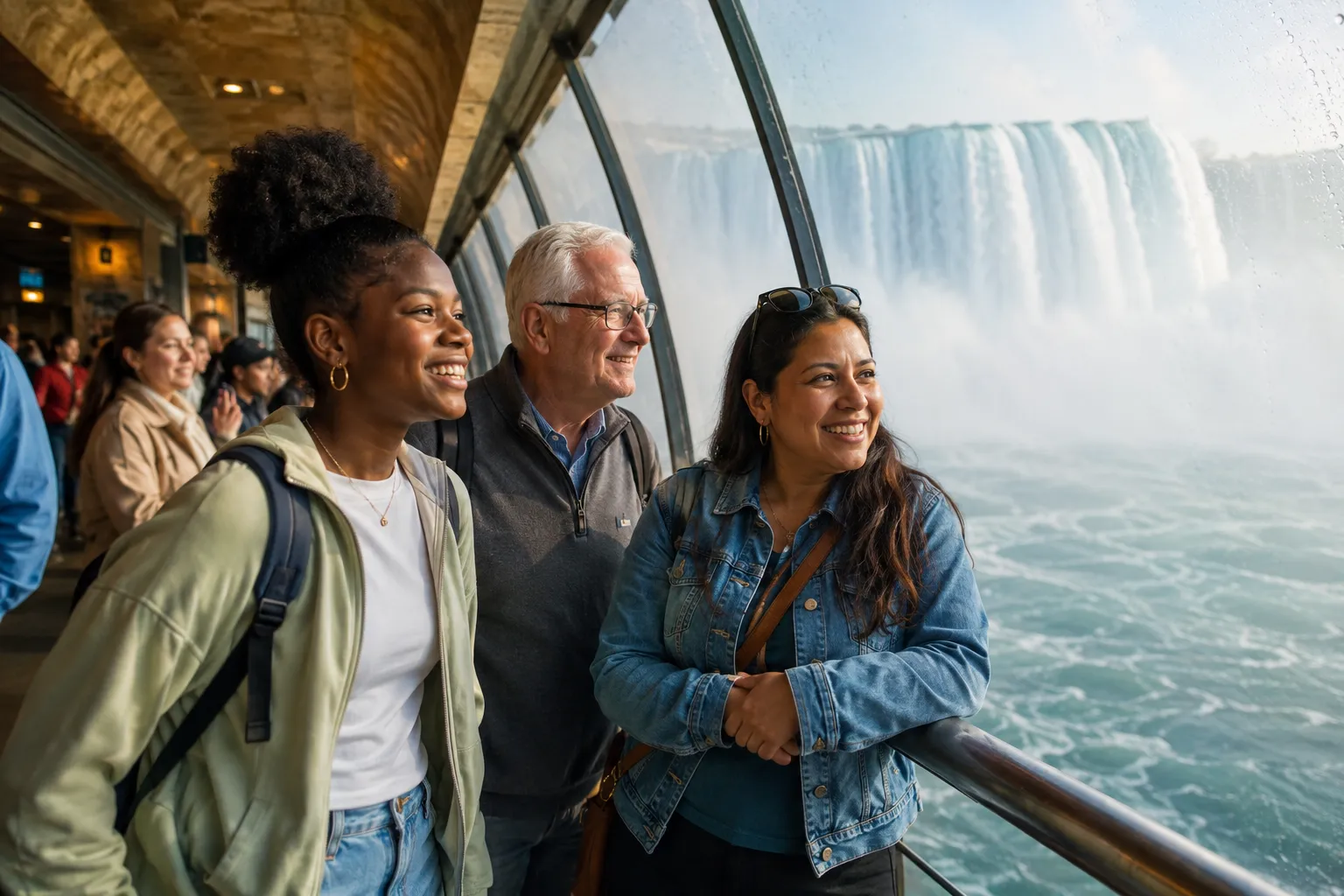
Top indoor and enclosed options at Niagara Falls:
- Journey Behind the Falls: A tunnel system cut directly into the rock behind Horseshoe Falls. The experience is underground and enclosed, making it one of the most smoke-proof attractions at the falls. BG Tours’ Toronto to Niagara Falls tour with Boat Cruise, Journey Behind the Falls, and Skylon Tower includes this as a core component.
- Skylon Tower Observation Deck: The enclosed indoor observation deck offers panoramic views of the falls from above without direct outdoor exposure. On a smoke day, the haze itself can create a dramatic, moody visual that makes for memorable photography.
- Niagara Parks Power Station: The historic power station features indoor exhibits and a tunnel experience. Check the Niagara Parks Power Station Tunnel Night Show schedule for 2026 for current programming.
- Niagara Whirlpool and Aero Car: The Niagara Whirlpool and Aero Car involves some outdoor exposure but offers sheltered viewing areas. On low-smoke days following an advisory, this is a strong add-on.
- Clifton Hill attractions: Indoor entertainment venues, wax museums, and restaurants along Clifton Hill provide full shelter.
- Niagara-on-the-Lake wineries: If the smoke is concentrated at the falls, a short drive to the wine region may offer better air quality and a full indoor tasting experience. See what to expect on a Toronto to Niagara wine tour add-on for details.
For a full list of things to do beyond the outdoor falls experience, the 25 Niagara Falls experiences Toronto day-trippers often miss is a practical resource for building a smoke-day itinerary.
Will Wildfire Smoke Affect Niagara Falls Next Week?
Predicting wildfire smoke one week out is difficult because it depends on active fire behavior and shifting wind patterns, both of which are inherently variable. However, a few reliable tools can give you a 48-72 hour outlook:
- AirNow.gov (U.S. side): Provides hourly AQI readings and a forecast map for the Niagara Falls, NY area.
- Government of Canada AQHI: Covers the Ontario side of the falls with hourly readings and short-range forecasts.
- IQAir and PurpleAir: Both aggregate real-time sensor data and provide short-range forecasts.
- National Weather Service Buffalo: Issues air quality alerts for western New York, including Niagara County.
Practical planning rule: If active wildfires are burning in Ontario, Quebec, or the U.S. Pacific Northwest with wind patterns directed toward the Great Lakes, the probability of smoke events at Niagara Falls increases significantly. Check forecasts 24-48 hours before your trip rather than relying on a week-ahead outlook.
For visitors planning a Toronto to Niagara Falls day trip, booking with a guided tour operator rather than self-driving gives you the option to postpone with less logistical friction, no parking, no gas costs, and no solo navigation to rearrange.
Frequently Asked Questions
Q: Why were the Niagara Falls fireworks cancelled in July 2026? The nightly fireworks program was paused on July 15, 2026, because Canadian wildfire smoke pushed the AQI in Niagara Falls to “very unhealthy” levels, peaking at 330 on July 16. Officials suspended the program to protect public health and will resume it when air quality improves. [1][2]
Q: Are helicopter tours at Niagara Falls running right now? As of July 16, 2026, Rainbow Air Helicopter Tours suspended all operations due to the “very unhealthy” air quality caused by wildfire smoke. Check directly with the operator for resumption updates. [2]
Q: Is Niagara Falls State Park open during the smoke advisory? Yes. Niagara Falls State Park remained open on July 16, 2026, despite the air quality advisory. The Maid of the Mist also continued operating. Individual visitors should assess their own health risk before spending extended time outdoors. [2]
Q: What AQI level is considered “very unhealthy”? An AQI between 201 and 300 is classified as “very unhealthy.” At this level, the entire general population, not just sensitive groups, faces a significant risk of health effects from outdoor air exposure. The Niagara Falls reading on July 16, 2026, reached 330, which technically falls into the “hazardous” category. [2]
Q: Has this happened before at Niagara Falls? Yes. In June 2023, Niagara Falls fireworks were cancelled under similar wildfire smoke conditions. The recurrence in 2026 suggests that smoke disruptions during summer months are becoming a recurring seasonal risk for the region. [3]
Q: What mask should I wear during a wildfire smoke advisory? Wear an N95 or KN95 respirator. These masks filter fine particulate matter (PM2.5) effectively. Standard cloth masks and surgical masks do not provide adequate protection against wildfire smoke particles.
Q: Can I get a refund if my Niagara Falls tour is cancelled due to smoke? If the operator cancels the tour, you are generally entitled to a refund or rescheduling. If the attraction remains open but you choose not to attend, your options depend on the operator’s cancellation policy. Contact the operator directly and ask about air quality-related flexibility.
Q: How do I check current air quality at Niagara Falls? Use AirNow.gov for the U.S. side (Niagara Falls, NY) or the Government of Canada’s Air Quality Health Index tool for the Ontario side. Both provide real-time hourly readings and short-range forecasts.
Q: Will the Niagara Falls fireworks be rescheduled to a specific makeup date? No specific makeup date has been announced. The fireworks program simply resumes on the next eligible evening once air quality returns to safe levels. The program runs nightly at 10 p.m. through October 12, so there are many remaining opportunities. [1]
Q: Are indoor Niagara Falls attractions safe to visit during a smoke advisory? Yes. Fully enclosed indoor attractions, including Journey Behind the Falls tunnels, Skylon Tower’s enclosed observation deck, and the Niagara Parks Power Station, are safe to visit during a smoke advisory because you are not exposed to outdoor air during the experience.
Q: Is a guided tour better than self-driving during uncertain air quality conditions? For most visitors, yes. A guided tour gives you a built-in expert who can adapt the itinerary in real time, redirect to indoor alternatives, and handle logistics, eliminating the stress of navigating cancellations on your own. See the Niagara Falls tour vs self-drive comparison for a full breakdown.
Q: What other Niagara Falls events have been cancelled in 2026? The “Thunder of Niagara” air show, scheduled for June 2026, was cancelled due to military operational demands overseas, unrelated to air quality. The July 2026 smoke event then added fireworks and helicopter tours to the list of affected activities. [4]
Conclusion
The “very unhealthy” wildfire smoke that cancelled Niagara Falls fireworks and helicopter tours in July 2026 is a clear reminder that Canadian wildfire season now directly affects one of North America’s most visited destinations. An AQI of 330 is not a minor inconvenience, it is a genuine health event that warrants real changes to how visitors plan and experience their trip.
Actionable next steps for visitors:
- Check AQI before every visit. Use AirNow.gov or Canada’s AQHI tool the morning of your trip. Do not rely on week-ahead forecasts for smoke events.
- Pack N95 masks. Make them a standard part of your Niagara Falls travel kit from June through September.
- Book tours with built-in flexibility. A guided tour from a knowledgeable operator can pivot to indoor highlights quickly when conditions change. Explore BG Tours Canada’s Niagara Falls packages, including Journey Behind the Falls and Skylon Tower, which offer strong indoor components regardless of outdoor conditions.
- Know your refund rights. If your operator cancels due to air quality, ask about refunds or rescheduling immediately. If you choose not to attend an open attraction, review the cancellation policy and ask about flexibility.
- Build indoor alternatives into your itinerary from the start. The 25 Niagara Falls experiences beyond the outdoor falls and the Niagara Parks Power Station Tunnel Night Show are excellent starting points.
Niagara Falls remains one of the world’s great natural wonders, and the vast majority of visits go ahead without disruption. Knowing how to respond when wildfire smoke does arrive means you spend less time frustrated and more time experiencing everything this destination has to offer.
For questions about current tour availability or to book a Niagara Falls experience, contact BG Tours Canada at info@bgniagaratours.com or call +1 647 881 1253.
References
[1] Nightly Fireworks At Niagara Falls Paused Due To Canadian Wildfire Smoke – https://spectrumlocalnews.com/nys/buffalo/news/2026/07/15/nightly-fireworks-at-niagara-falls-paused-due-to-canadian-wildfire-smoke?utm_source=openai
[2] Very Unhealthy Wildfire Smoke Cancels Niagara Falls Fireworks Helicopter Tours – https://www.wkbw.com/niagara-county/very-unhealthy-wildfire-smoke-cancels-niagara-falls-fireworks-helicopter-tours?utm_source=openai
[3] Niagara Falls Fireworks Cancelled Thursday Due To Wildfire Smoke – https://www.chch.com/chch-news/niagara-falls-fireworks-cancelled-thursday-due-to-wildfire-smoke/?utm_source=openai
[4] Nfars Announces Cancellation Of Thunder Of Niagara 2026 Air Show – https://www.wnypapers.com/news/article/current/2026/03/09/165503/nfars-announces-cancellation-of-thunder-of-niagara-2026-air-show?utm_source=openai
[5] Fireworks And Pyrotechnics – https://niagarafalls.ca/property-home-and-environment/emergency-services/fire-department/fireworks-and-pyrotechnics/?utm_source=openai



